Charting Electromagnetic Interference Thresholds in Wireless Controller Ecosystems Across Dense Urban Play Environments
Ben Ludwig · May 30, 2026
Charting Electromagnetic Interference Thresholds in Wireless Controller Ecosystems Across Dense Urban Play Environments
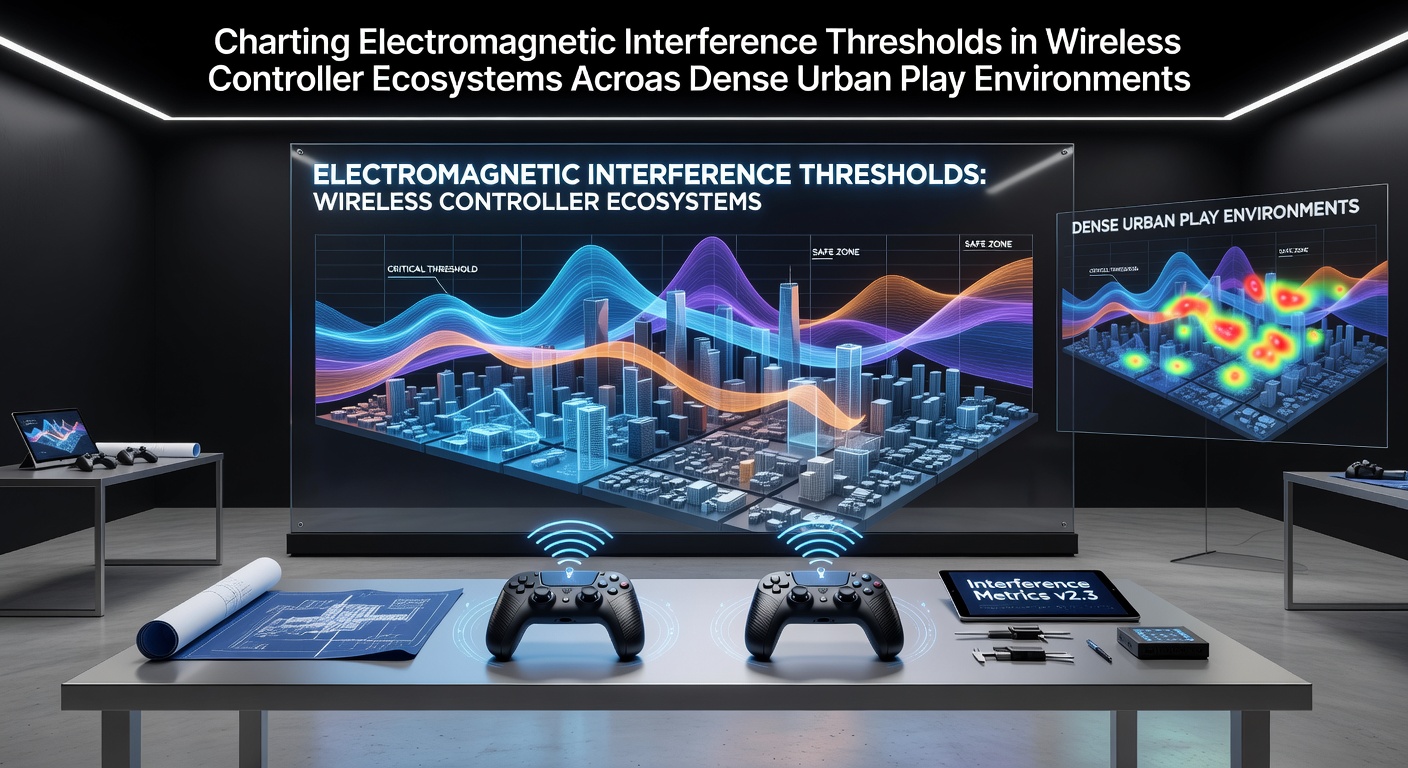
Wireless controller ecosystems rely on frequency bands that include 2.4 GHz and 5 GHz channels along with Bluetooth protocols yet these same bands face constant pressure from overlapping transmissions in dense urban zones where routers, mobile devices, and infrastructure equipment operate simultaneously. Observers note that interference thresholds become critical when signal strength from external sources exceeds the receiver sensitivity levels built into most gaming peripherals.
Studies from regulatory bodies document how urban density amplifies these interactions. Data collected across multiple city blocks shows that cumulative electromagnetic noise often reaches levels that disrupt packet delivery between controllers and consoles or PCs. Researchers have mapped these thresholds by measuring bit error rates under controlled conditions that simulate apartment buildings filled with active networks.
Understanding Frequency Overlap in Crowded Spaces
Wireless controllers transmit small data packets at regular intervals and any sustained disruption in those intervals produces noticeable input lag or dropped commands. Engineers measure interference thresholds using spectrum analyzers that capture power spectral density across targeted bands. When ambient signals climb above -70 dBm in the same channel, many consumer-grade receivers begin to exhibit retransmission spikes that compound during peak evening hours.
Equipment manufacturers publish receiver sensitivity figures while independent tests reveal real-world performance often falls short once multiple neighboring networks share the spectrum. Those who've examined metropolitan play sessions report that 2.4 GHz devices suffer more frequently than 5 GHz alternatives because lower-frequency bands carry signals farther and accumulate more overlapping traffic.
Measurement Techniques and Threshold Documentation
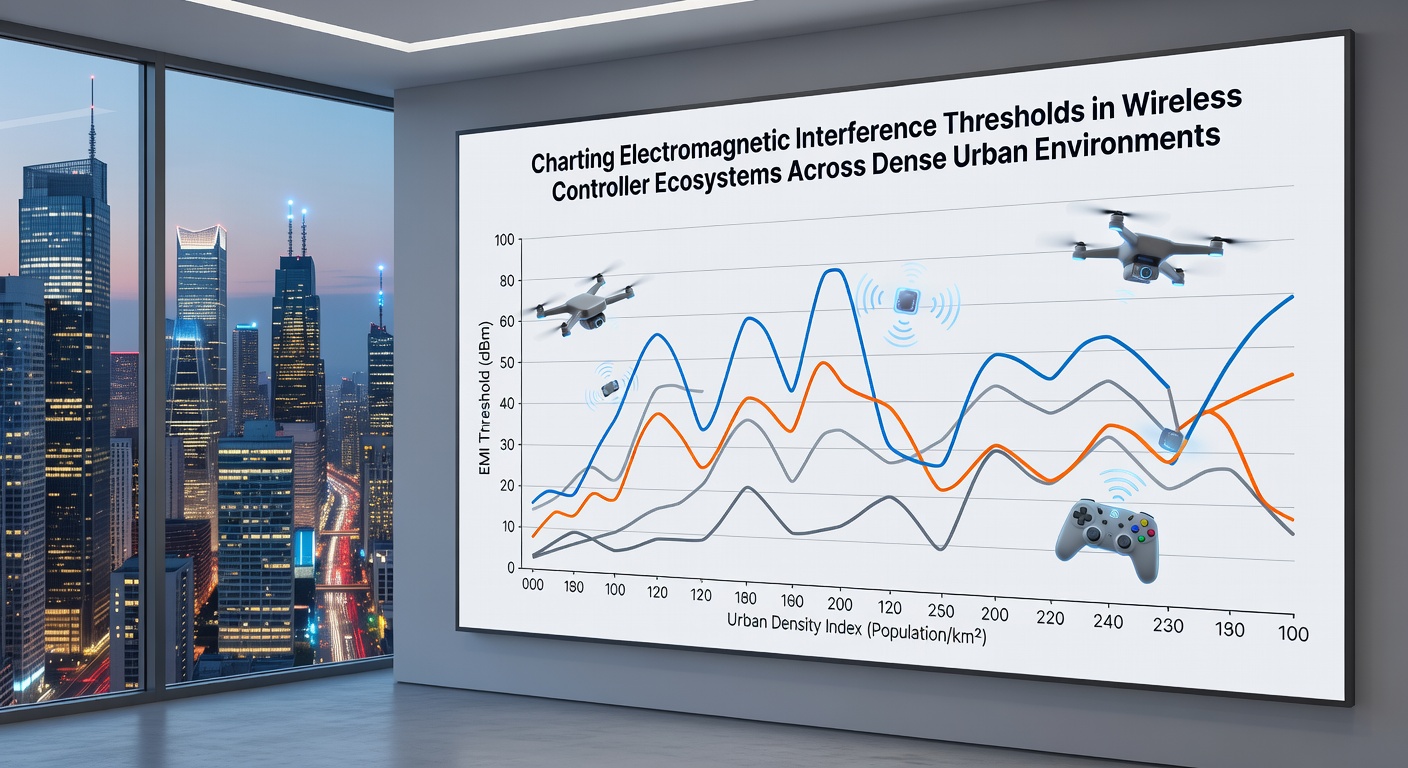
Mapping efforts require portable spectrum monitoring kits combined with logging software that records controller input accuracy alongside ambient RF readings. Teams place test stations in high-rise residential clusters and record data over several days to capture both diurnal patterns and sudden spikes from events such as large public gatherings. Results indicate that interference thresholds shift upward by 8 to 12 dB during weekend evenings when household device density peaks.
Standards organizations continue to refine test protocols that account for urban multipath propagation. A 2025 report issued by the Federal Communications Commission outlined revised measurement guidelines that incorporate statistical sampling across representative neighborhoods. Meanwhile the European Telecommunications Standards Institute released complementary guidance focused on coexistence testing between short-range devices and emerging 6 GHz allocations.
Impact Patterns Observed Across Cities
Latency spikes correlate directly with measured interference levels yet the relationship is not always linear because error-correction algorithms in modern controllers mask minor disruptions until thresholds are crossed. Players in central business districts encounter more frequent issues than those in suburban zones according to aggregated telemetry shared by several accessory makers. One documented case involved an esports venue located above a busy transit hub where controller disconnects increased measurably whenever train signaling systems activated nearby.
Adaptive frequency hopping helps many devices avoid persistent interferers yet the technique reaches its limit once the number of clean channels drops below a critical count. Research teams at several universities have modeled these tipping points using Monte Carlo simulations that incorporate real urban spectrum occupancy data collected through crowdsourced mobile apps.
Mitigation Approaches and Emerging Standards
Hardware designers respond by improving front-end filtering and implementing dynamic channel selection algorithms that scan for quieter frequencies before each session. Some newer controllers include optional wired fallback modes that bypass wireless entirely when interference exceeds preset limits. Software utilities now allow users to view real-time channel occupancy graphs so they can manually select less congested bands.
Industry groups advocate for tighter coordination between gaming hardware specifications and broader spectrum management policies. Updates scheduled for rollout in May 2026 aim to incorporate automated detection of urban interference signatures and trigger preemptive channel switches without user intervention. These changes build on existing coexistence frameworks already adopted in several regions.
Future Monitoring and Data Collection
Continuous spectrum surveillance networks are expanding in major metropolitan areas to provide granular interference maps that developers can reference during product testing. Academic partnerships with municipal authorities supply anonymized datasets that track long-term trends in RF congestion. Such resources help establish baseline thresholds that evolve alongside new wireless technologies and increasing device density.
Calibration standards continue to advance through collaborative efforts that include both regulatory agencies and gaming accessory manufacturers. The resulting guidelines emphasize repeatable test conditions that reflect actual urban environments rather than idealized laboratory settings.
Conclusion
Electromagnetic interference thresholds in wireless controller ecosystems reflect the interplay between device specifications, urban signal density, and evolving spectrum usage patterns. Systematic charting of these thresholds supplies actionable data for hardware refinement and operational adjustments. Continued measurement programs and coordinated standards development will determine how effectively gaming peripherals maintain reliable performance as cities grow more electronically saturated.