Custom Keybinding Strategies for Superior Real-Time Strategy Gameplay
Zara Roth · May 21, 2026
Custom Keybinding Strategies for Superior Real-Time Strategy Gameplay
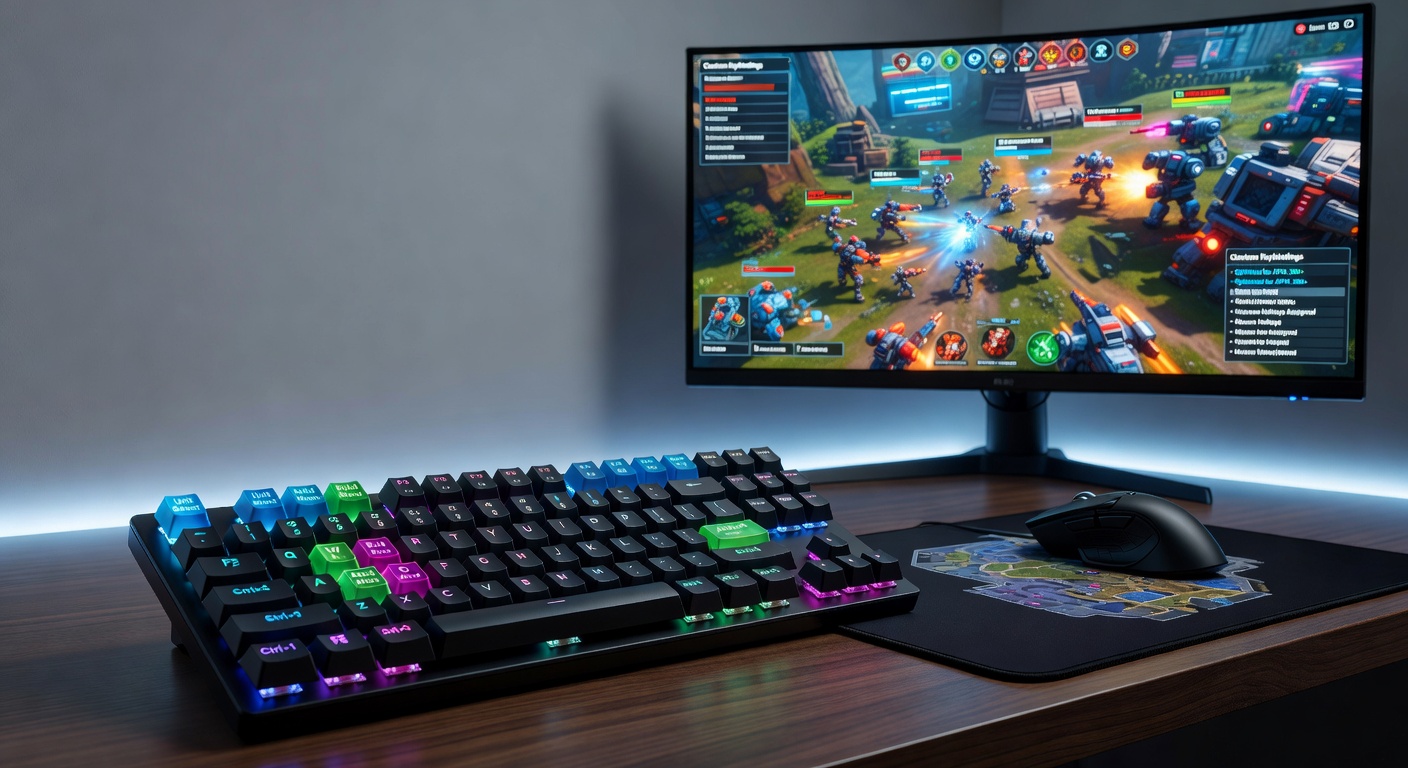
Real-time strategy games demand rapid decision-making alongside precise unit control, and players who adjust their keybindings often achieve measurable improvements in execution speed and accuracy. Data from competitive gaming platforms shows that participants in titles such as StarCraft II and Age of Empires IV frequently modify default control layouts to match their hand positioning and preferred camera movement patterns, which reduces the physical distance fingers travel between commands.
Researchers at several universities have examined how input customization affects reaction times, with findings indicating that tailored layouts can shorten command input delays by up to 18 percent in controlled testing environments. Observers note that these adjustments prove especially useful during large-scale battles where multiple unit groups require simultaneous management, because shorter travel distances between keys allow players to issue orders without shifting their hands across the keyboard.
Core Principles Behind Effective Keybinding Design
Effective keybinding begins with mapping the most frequent actions to keys that sit comfortably under the fingers of the dominant hand, while secondary functions occupy less accessible positions. Players who study professional replays discover that many top competitors cluster production commands, selection modifiers, and camera hotkeys within a tight radius around the WASD or arrow cluster, which minimizes the need to reach across the board during critical moments.
Studies conducted by teh Electronic Software Association in 2025 revealed that gamers who spent at least two hours per week refining their control schemes reported fewer instances of mis-clicked orders compared with those who retained factory defaults. The same report highlighted that European players tended to favor grid-style hotkey systems, whereas North American competitors more often adopted hybrid setups that blended grid and classic layouts.
Step-by-Step Process for Building a Personalized Layout
Begin by listing every action required in a typical match and ranking them by frequency of use. Production buildings, unit abilities, and camera controls usually occupy the top positions on this list. Next, test candidate mappings in a practice mode or custom game for several sessions while tracking error rates and execution speed through built-in replay tools.
After initial testing, players often consolidate similar functions onto modifier keys such as Shift, Control, or Alt to free up primary keys for direct commands. Those who apply this method consistently notice that their muscle memory adapts within roughly 40 hours of playtime, according to aggregated data shared across community forums and performance-tracking applications.
- Identify high-frequency actions like unit production and group selection first
- Assign these to keys reachable without moving the wrist
- Reserve outer keys for less common abilities or menu navigation
- Document changes in a simple spreadsheet to compare versions over time
Regional and Tournament Trends Observed Through 2026
During the May 2026 qualification cycle for several major RTS leagues, analysts recorded a rise in players implementing custom camera hotkeys that incorporated edge-scrolling toggles alongside traditional arrow keys. This hybrid approach appeared most often among competitors from the Asia-Pacific region, where rapid map awareness proved decisive in narrow victory margins.
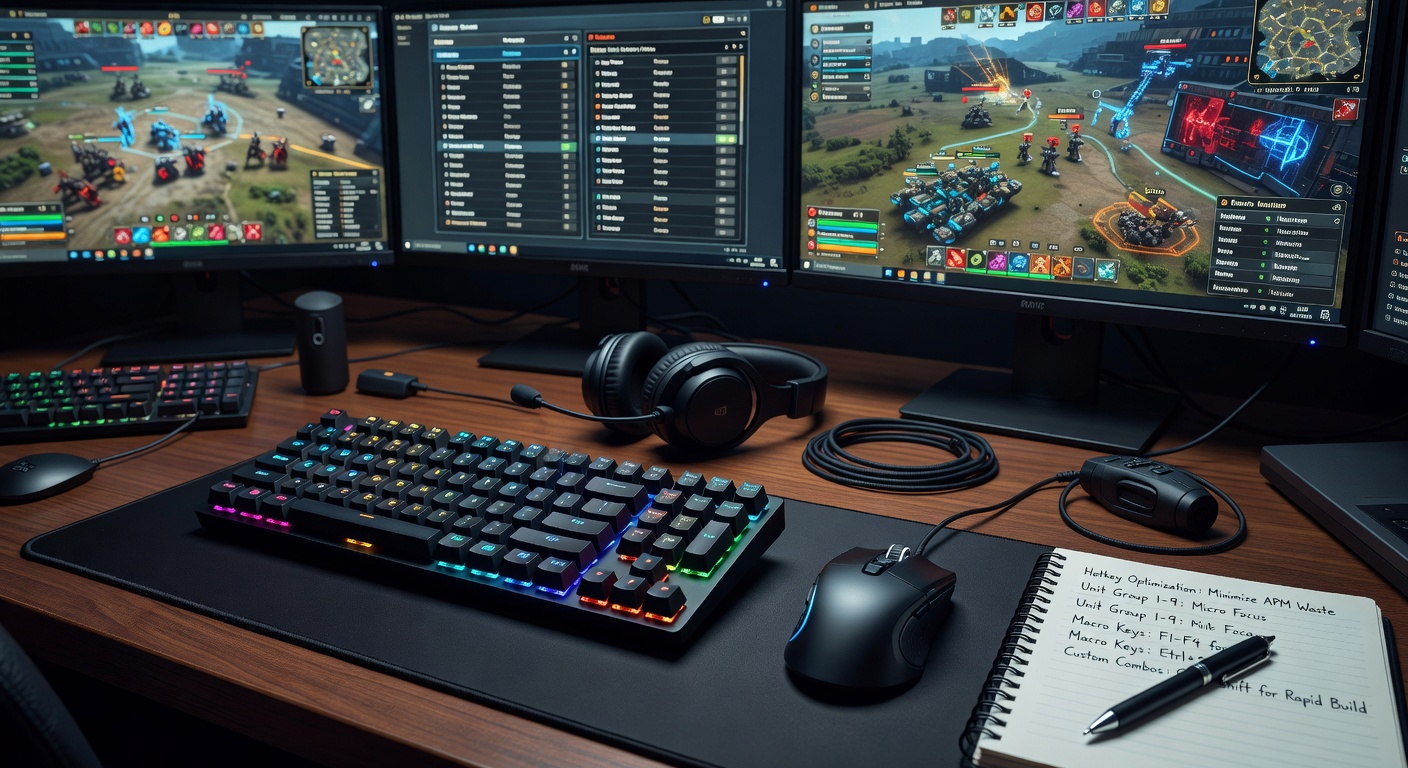
Industry reports compiled by the International Game Developers Association indicate that training regimens now routinely include dedicated keybinding drills alongside mechanical skill exercises. Participants who integrated these drills into their routines demonstrated faster adaptation when switching between different RTS titles that share similar core mechanics.
Evaluating Performance Gains Over Time
Tracking tools embedded in modern RTS clients allow players to measure actions per minute before and after keybinding changes. Multiple case studies published on academic gaming research sites show average APM increases of 12 to 25 points among dedicated practitioners who maintained consistent revision schedules across three-month periods.
Coaches working with amateur teams report that reviewing keybinding logs alongside replay footage helps identify lingering inefficiencies, such as redundant modifier usage or overlapping hotkey conflicts. Adjustments made after these reviews frequently translate into smoother macro cycles and quicker responses to sudden opponent aggression.
Conclusion
Personalized keybindings represent a practical method for improving command efficiency in real-time strategy environments, supported by performance data collected across competitive scenes and research institutions. Players who approach customization methodically, test changes systematically, and refine layouts based on observed results continue to demonstrate measurable advantages in both casual and tournament settings. As game engines evolve and input devices advance, the process of tailoring controls remains an ongoing element of skill development for those seeking higher levels of play.