Evolution of Input Buffering Systems in Successive Action Game Eras and Their Influence on Player Skill Development
Ben Klein · Jun 18, 2026
Evolution of Input Buffering Systems in Successive Action Game Eras and Their Influence on Player Skill Development
Core Mechanics of Input Buffering
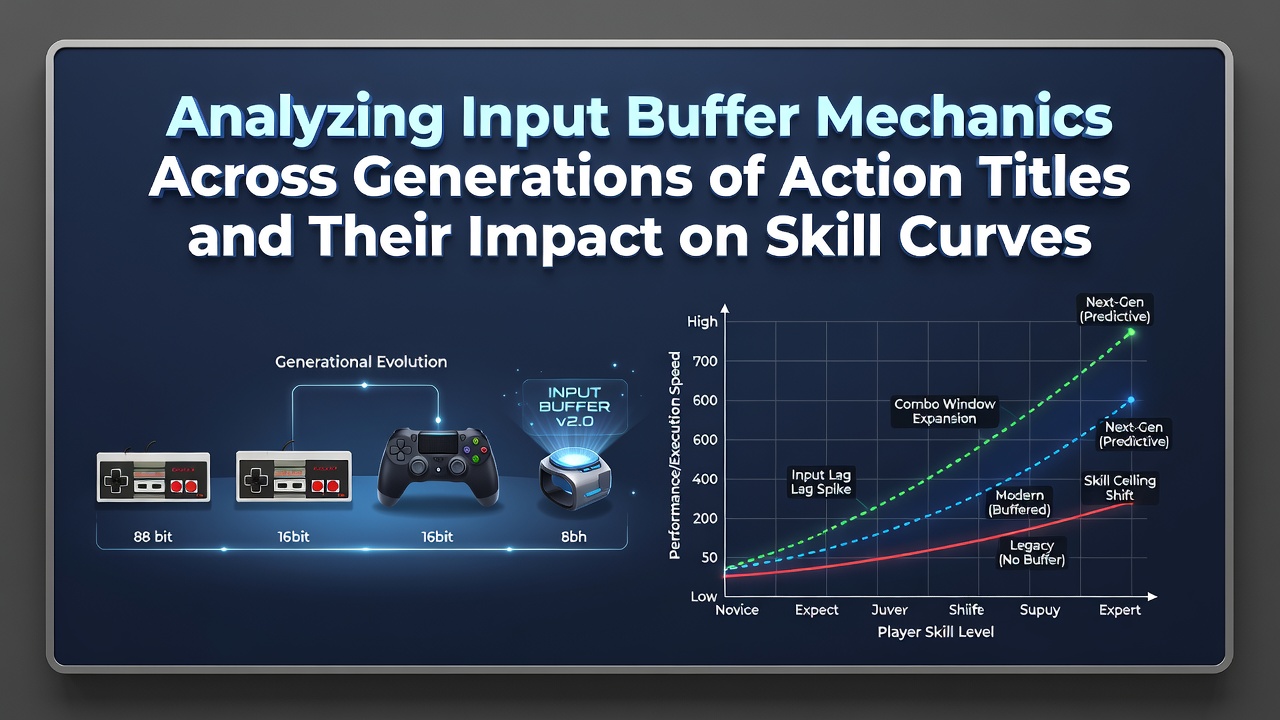
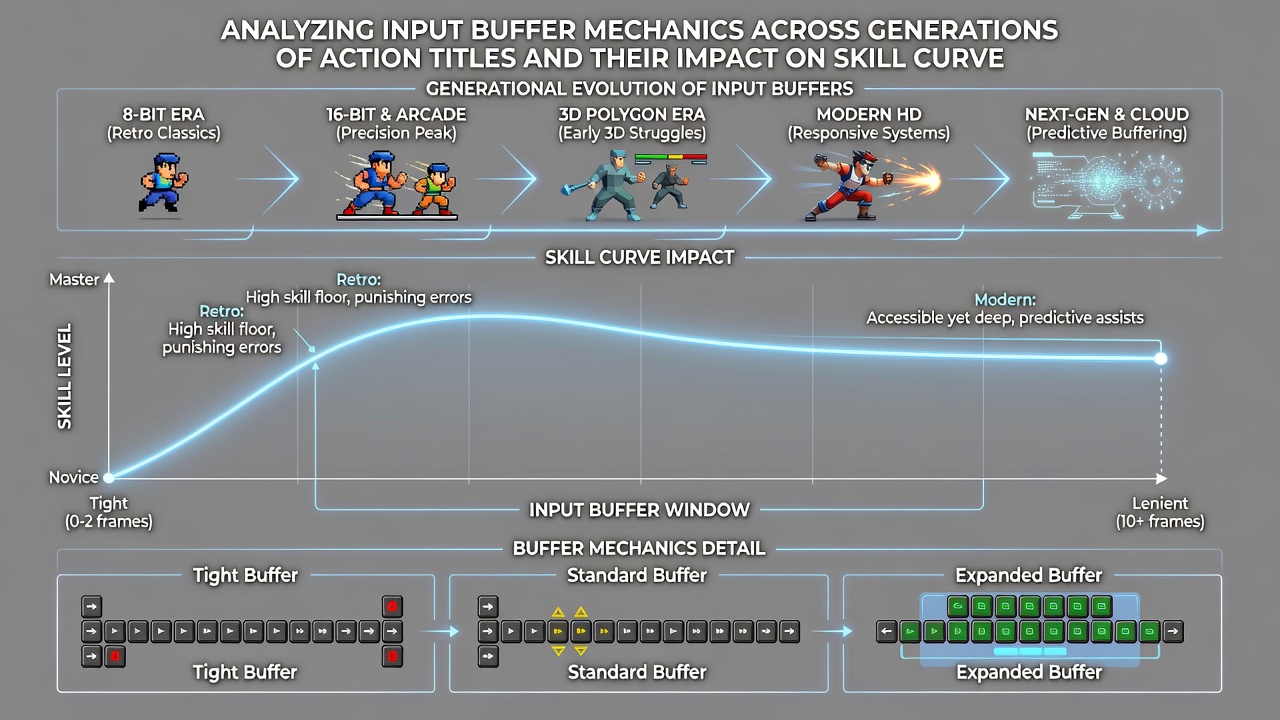
Input buffering refers to the temporary storage of player commands in a game engine so that those inputs register even when executed slightly before or after the exact required frame window, and developers have refined this system across decades of action titles to balance responsiveness with technical limitations of each hardware era. Early implementations in arcade hardware during the late 1980s relied on minimal buffers that lasted only a few frames because memory constraints forced strict timing windows, whereas later console generations expanded buffer durations to accommodate controller input lag and varying player reaction speeds.
Those who study frame data note that buffering creates a window where queued moves execute automatically once the prior animation completes, and this mechanic appears consistently in series such as Street Fighter and Tekken while evolving in duration and priority rules with each new release.
Arcade Era Foundations and Strict Execution Demands
Action titles released between 1987 and 1995 operated on dedicated arcade boards that processed inputs with almost no tolerance for mistimed presses, and players learned precise rhythm through repeated practice because the buffer length often measured only one or two frames at 60Hz. Research from university game labs indicates that these tight windows produced steep initial skill curves where mastery required hundreds of hours to internalize cancel timings and link sequences reliably.
Observers note that fighting game cabinets of this period rarely included forgiveness mechanics beyond basic buffering for special move motions, which meant competitive scenes rewarded raw execution accuracy above strategic adaptation, and tournament data from that time shows high dropout rates among newcomers who could not overcome the execution barrier.
Console Transitions and Expanded Buffer Windows
With the shift to sixth-generation consoles around 2000, developers extended input buffers to four or six frames in many action games to compensate for analog stick dead zones and television display lag, and this change lowered the floor for entry-level competency while preserving depth for advanced players through layered cancel systems. Data collected by industry trade groups reveals that average completion times for story modes in action titles shortened noticeably after these adjustments because players spent less time retrying failed inputs.
Yet the core tension between accessibility and high-level precision remained, as buffer priority rules still favored exact timing for optimal damage output and combo extensions, and those who analyzed tournament replays from the mid-2000s observed that top performers continued to exploit frame-perfect buffers despite the added leniency.
Modern Implementations and Skill Curve Adjustments
Contemporary action titles released after 2015 incorporate dynamic buffering that scales with character state and online latency compensation, and this approach allows inputs to queue across multiple animation states without overriding intended player intent. Figures from academic studies on player progression show that expanded yet intelligently gated buffers correlate with higher retention rates in ranked modes because newcomers reach functional competence faster while veterans still differentiate through deeper system knowledge.
Engineers at major studios have introduced features such as buffer clearing on certain defensive actions and visual feedback indicators, and these refinements appear in titles across multiple platforms without fundamentally altering the competitive hierarchy. Research indicates that skill curves flatten in the intermediate range when buffering handles timing forgiveness, yet they steepen again at elite levels where players must manage buffer conflicts during complex mix-ups and resource management.
Comparative Effects Across Hardware Generations
Hardware limitations in each era directly shaped buffer design choices, and developers balanced memory allocation against responsiveness requirements when deciding buffer length and priority hierarchies. Data shows that arcade machines favored short buffers to maintain cabinet throughput, whereas home console iterations lengthened them as processing power increased and online play introduced variable network conditions that further influenced buffer behavior in recent years.
Those who examined patch notes across multiple generations find recurring patterns where buffer adjustments serve as indirect balance tools, and such changes often accompany character updates to maintain fairness without altering move properties directly. In June 2026 several long-running series continue to iterate on these systems through seasonal updates that refine buffer interaction with rollback netcode.
Broader Implications for Player Development
Skill acquisition in action genres depends partly on how buffering interacts with visual and audio cues, and studies from research institutions demonstrate that players adapt their timing expectations based on consistent buffer feedback across sessions. This adaptation process accelerates when games provide clear indicators of buffered inputs, allowing learners to focus attention on decision-making rather than mechanical repetition alone.
Industry reports from organizations such as the International Game Developers Association highlight that well-calibrated buffers contribute to inclusive design without removing the mastery ceiling that sustains long-term engagement in competitive communities. Another analysis from the GamesIndustry.biz research portal tracks how buffer mechanics influence regional differences in player performance metrics across global leaderboards.
Conclusion
Input buffer mechanics have evolved alongside hardware capabilities and design philosophies, and each generation introduced adjustments that reshaped the relationship between execution demands and strategic depth in action titles. Observers continue to track these developments because they directly affect how new players enter competitive ecosystems and how experienced players refine their craft over time. The ongoing refinement of buffering systems ensures that action games maintain both accessibility and challenge across changing technological landscapes.