Exploring Resource Management Strategies Across Extended Survival Game Economies
Ben Klein · Aug 20, 2026
Exploring Resource Management Strategies Across Extended Survival Game Economies
Survival games with long-term economies rely on intricate systems where players gather, trade, and allocate scarce materials over extended play sessions, and researchers track these patterns through data logs from titles like Rust and DayZ. Developers design resource nodes with fixed spawn rates while player actions create secondary markets that shift values daily, and studies from academic institutions show how hoarding behaviors emerge when servers run for months without resets.
Core Elements of In-Game Resource Systems
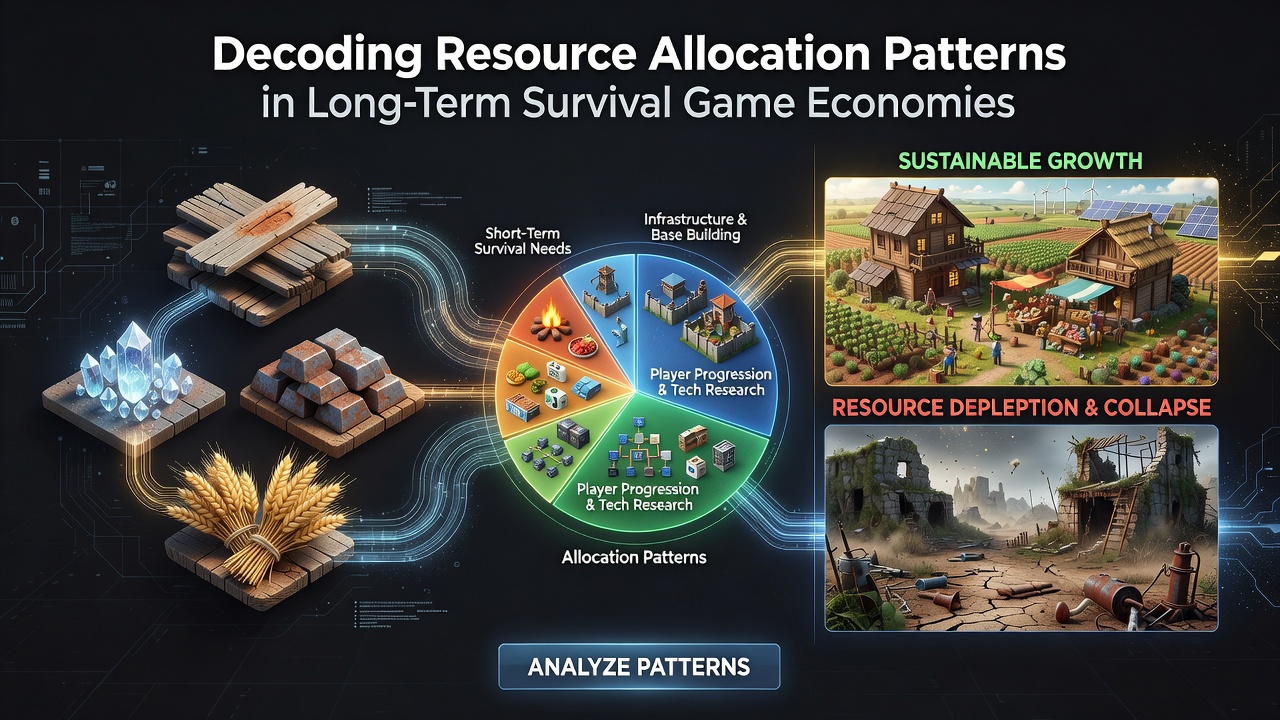
Basic survival loops start with gathering wood, stone, and food, yet extended economies layer on crafting trees, base building, and player-driven exchanges that turn raw items into currency equivalents. Observers note that games enforce decay mechanics on structures and tools, which forces continuous allocation decisions as players weigh short-term survival against long-term infrastructure investments, and data collected across thousands of sessions indicates these decay timers directly influence trading volumes.
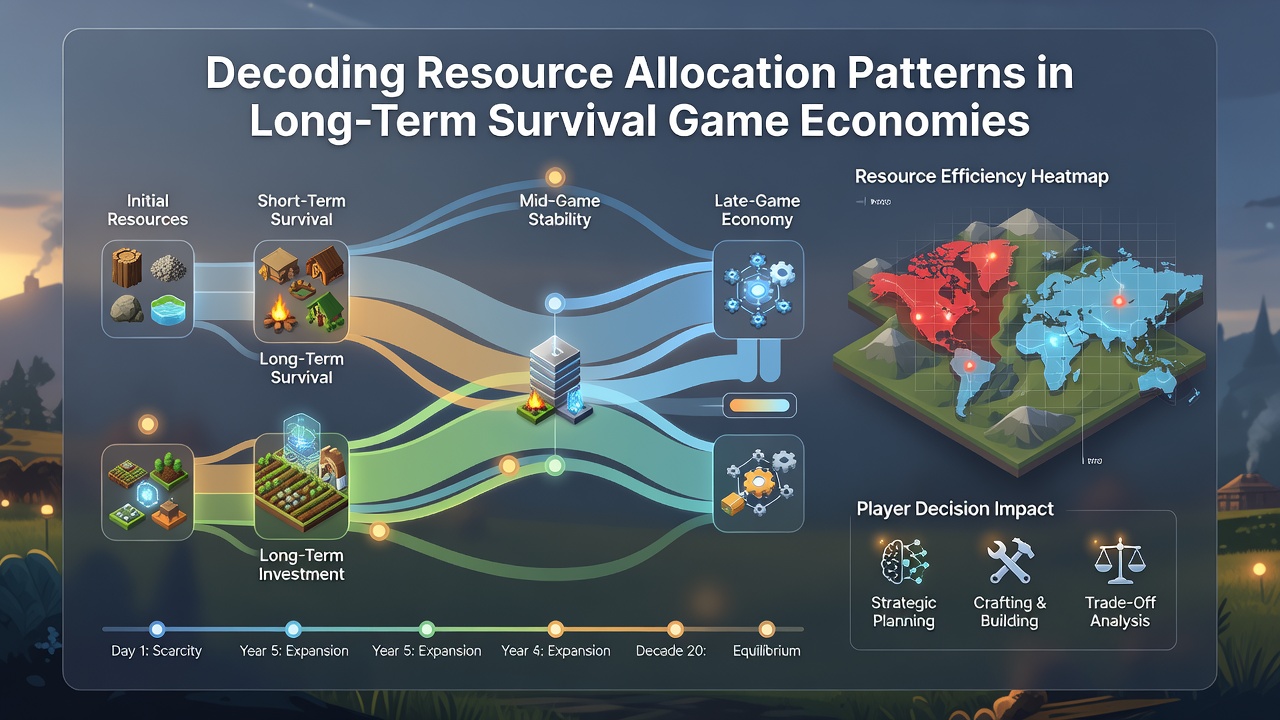
Virtual markets form organically when players establish trading posts or auction systems, and patterns emerge where certain resources like rare metals hold stable value while perishable goods fluctuate with server population changes. Researchers at institutions in North America and Australia have mapped these flows using network analysis, revealing clusters of high-activity traders who control distribution hubs on populated servers.
Observed Player Behaviors in Prolonged Sessions
Long-running servers reveal distinct allocation strategies, with some groups focusing on stockpiling defensive materials while others prioritize mobility and quick extraction. Evidence from gameplay telemetry shows that alliances often coordinate resource sharing through shared storage, reducing individual risk but creating dependency networks that collapse when key members leave. Those who study these environments find that inflation spikes occur after major updates introduce new crafting recipes, as demand for legacy materials drops suddenly.
What's interesting is how solo players adapt by specializing in niche gathering, such as farming rare herbs or salvaging electronics, and they integrate into larger economies through direct sales rather than bartering. Figures from industry reports released around August 2026 highlight that servers with enforced wipe schedules maintain steadier resource prices compared to persistent worlds where accumulation leads to extreme wealth gaps.
Economic Models and Balancing Approaches
Game designers employ algorithms that adjust spawn rates based on aggregate player activity, and this dynamic system prevents total depletion while encouraging exploration into new zones. According to analyses by the Entertainment Software Association, survival titles incorporate feedback loops where overharvesting triggers environmental changes that redirect player efforts toward alternative resources. European research groups have documented cases where community-run servers introduce custom taxes on trades, which redistributes wealth and alters allocation priorities across the population.
Yet persistent worlds without such interventions often develop black markets for restricted items, and telemetry data reveals these underground economies thrive during periods of high conflict when official trading stalls. Patterns indicate that resource allocation becomes more efficient when games provide clear information on global stock levels, allowing players to anticipate shortages rather than react after prices spike.
Case Examples from Established Titles
One long-running community in a popular survival title demonstrated how centralized farming operations could supply an entire server faction for over a year, with detailed logs showing daily yields matched against consumption rates. Another example from Australian-hosted servers illustrated migration waves where players relocated bases after local resources dwindled, creating temporary economic vacuums that new arrivals later filled. These instances align with broader findings that allocation patterns stabilize when players develop shared knowledge bases about optimal routes and timings.
Data from regulatory bodies in Canada and academic papers on virtual economies further confirm that external events, such as seasonal events or crossovers, temporarily boost certain resource values before they normalize. Observers track these shifts through public trade logs and in-game statistics that developers release periodically.
Conclusion
Resource allocation in long-term survival game economies follows measurable patterns shaped by mechanics, player interactions, and server policies, and continued analysis helps developers refine systems that maintain engagement without collapse. Reports from varied regions continue to document these dynamics as communities evolve their strategies over months of play.