Following the Trail of Rare Unlocks: Achievement Hunters' Tracking Strategies Across Console Generations and Revelations About Perseverance
Ben Ludwig · Jul 18, 2026
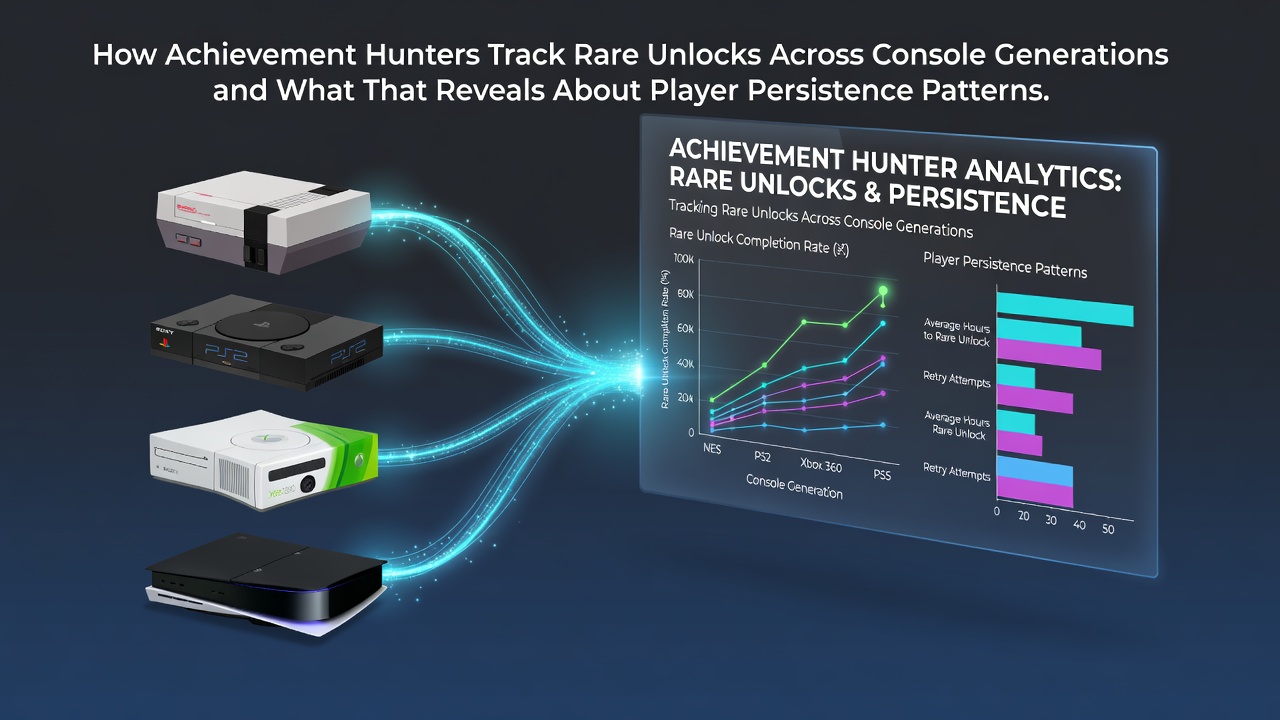
Following the Trail of Rare Unlocks: Achievement Hunters' Tracking Strategies Across Console Generations and Revelations About Perseverance
Players who pursue rare achievements maintain detailed records that span multiple hardware cycles from the Xbox 360 era through current PlayStation 5 and Xbox Series X systems, and data from tracking platforms indicate consistent patterns in how these individuals sustain long-term engagement with specific titles.
Communities centered on sites such as TrueAchievements and PlayStationTrophies.org compile completion percentages for every game released since 2005, allowing hunters to compare unlock rates between original releases and backward-compatible versions on newer hardware. These records show that titles with completion rates below 5 percent often retain active hunter groups years after launch because the underlying unlock conditions remain unchanged when games run on later consoles.
Methods Hunters Use to Log Progress
Hunters log every unlock through built-in console APIs and third-party overlays that export timestamps, then import those entries into spreadsheets or dedicated databases that flag missing achievements across console generations. One common approach involves exporting Xbox Live data via the official API while simultaneously pulling trophy lists from PlayStation Network accounts, after which hunters cross-reference entries to identify which rare items carried over during backward compatibility updates.
Community tools developed since the mid-2010s automate much of this work by scraping public profiles at regular intervals and generating graphs that display completion velocity over months or years. Observers note that these automated reports frequently reveal plateaus where progress stalls for extended periods before a single patch or console update suddenly enables previously blocked unlocks.
Patterns Across Hardware Transitions
When the Xbox One launched in 2013, many hunters transferred save data from Xbox 360 titles and continued tracking the same achievement lists, yet completion statistics collected by tracking sites demonstrate that only a small subset of players maintained momentum on games that required online servers no longer supported on newer hardware. Similar patterns emerged during the PlayStation 4 to PlayStation 5 transition, where trophy lists remained identical for backward-compatible games while hardware-specific achievements for the new console drew fresh attention from different player cohorts.

Research from the Entertainment Software Association indicates that engagement with older titles persists when achievement hunters can access them through backward compatibility programs, and European data compiled by the Interactive Software Federation of Europe shows comparable retention rates across regions.
What Completion Data Reveals About Persistence
Longitudinal records demonstrate that hunters who reach 100 percent completion on one console generation frequently begin the same process on the next generation within weeks of hardware release, suggesting that the tracking habit itself transfers more readily than any single game. Analysts examining public profile data find that individuals with ten or more years of tracked activity maintain lower average completion percentages on newer titles because they continue updating older lists simultaneously, which spreads effort across a broader catalog.
Monthly snapshots released by tracking platforms in July 2026 continue to show steady growth in the number of accounts maintaining active rare-unlock pursuits, particularly for games that received enhanced versions on current-generation hardware. These snapshots further indicate that persistence correlates strongly with the presence of time-limited events or server-dependent achievements that risk becoming unobtainable once support ends.
Conclusion
Tracking infrastructure built around console APIs and community databases provides measurable insight into how certain players distribute effort across hardware generations, and the resulting statistics document sustained activity rather than one-time bursts of interest in rare unlocks.