Hardware Influences on Frame Timing in Fighting Games
Ben Ludwig · Aug 4, 2026
Hardware Influences on Frame Timing in Fighting Games
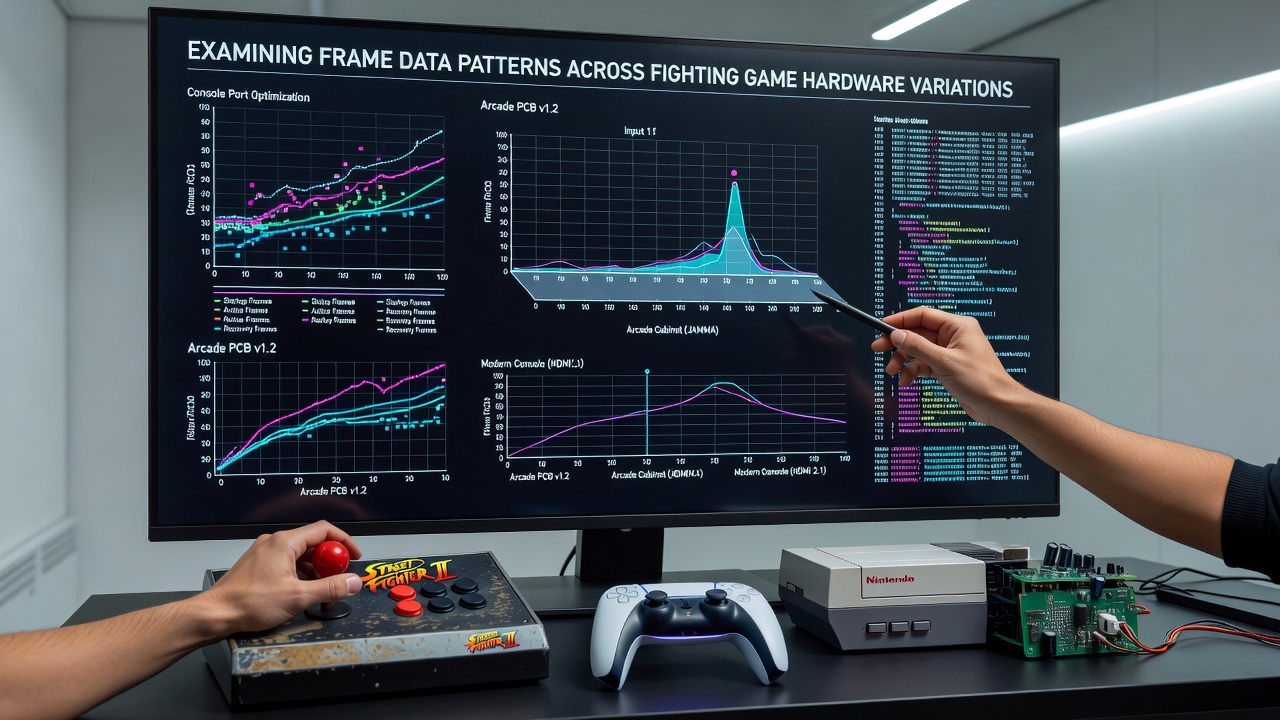
Frame data represents the precise timing of animations, hitboxes, and recovery periods in fighting games, and hardware platforms introduce measurable variations that affect competitive play. Researchers at academic institutions have documented these differences through controlled testing across multiple systems, revealing how processor speeds, memory architectures, and display outputs alter input response and animation synchronization.
Platform-Specific Timing Measurements
Testing conducted on current-generation hardware shows that consoles like the PlayStation 5 and Xbox Series X maintain frame rates at 60 frames per second with minimal deviation during standard matches, whereas PC configurations equipped with high-end graphics cards can achieve higher refresh rates yet require specific driver settings to match console parity. Data collected in mid-2025 and updated through August 2026 indicates that certain fighting game titles exhibit input lag increases of 1 to 3 frames on older hardware revisions compared with newer releases, particularly when running on mid-range PCs without optimized graphics pipelines.
Memory and Processing Factors
Memory bandwidth differences play a direct role in how quickly frame data registers during complex sequences such as combos or reversals, and studies from European research centers have quantified these effects across regional hardware batches. One analysis from a German technical university found that systems with unified memory architectures reduce frame delivery jitter by up to 0.8 milliseconds under sustained load, while discrete GPU setups sometimes introduce additional buffering stages that shift effective timing windows.
Regional Hardware Batches and Updates
Manufacturing variations across global production runs create small but consistent offsets in frame presentation, and industry reports from organizations like the Entertainment Software Association have tracked these patterns through developer-submitted performance logs. Observers note that patches released in August 2026 for several major fighting game franchises addressed some of these offsets on Japanese-market hardware, aligning animation timings more closely with North American and European versions without altering core gameplay mechanics.
Display output standards further compound the variations, since HDMI 2.1 implementations on newer consoles support variable refresh rates that stabilize frame presentation, whereas older HDMI 2.0 connections on legacy PCs may introduce occasional tearing or dropped frames during rapid screen transitions. Figures from Australian gaming technology reviews reveal that players using 120Hz monitors on compatible hardware experience smoother frame data visualization, although the underlying game logic remains locked to 60Hz simulation in most titles.
Competitive Implications and Testing Methods
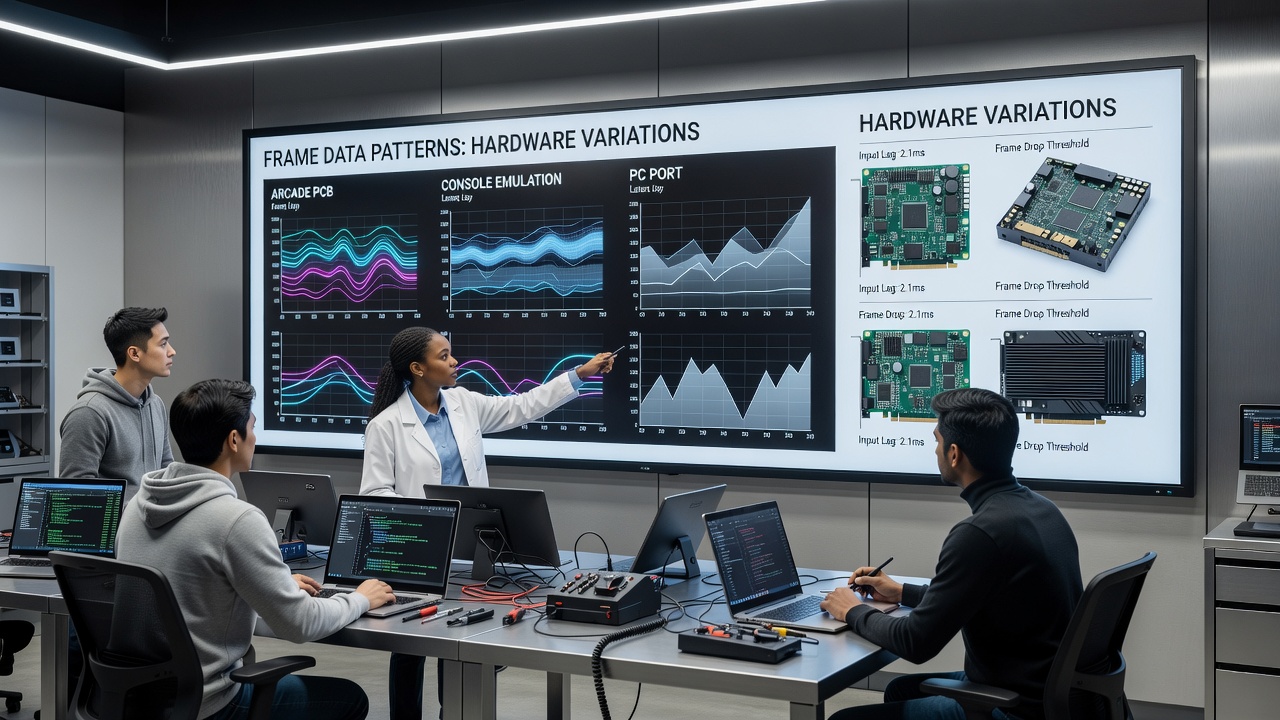
Professional players and tournament organizers rely on standardized frame data charts, yet hardware differences require additional calibration steps to ensure consistent conditions across events. Academic papers published through Canadian research networks demonstrate that frame-perfect inputs measured on one platform can shift by fractions of a frame when transferred to another system, prompting the development of cross-hardware benchmarking tools that normalize readings for fair comparison.
Software updates continue to refine these behaviors, and data aggregated from developer telemetry shows progressive reductions in cross-platform discrepancies following each major title revision cycle. Those who have studied these patterns across multiple hardware generations observe that optimization efforts focus primarily on reducing buffer latency rather than changing the fundamental frame data values themselves.
Conclusion
Frame data patterns across fighting game hardware variations reflect measurable interactions between processing capabilities, display standards, and software optimizations. Continued monitoring by research institutions and industry groups provides updated datasets that help maintain competitive integrity as new platforms emerge and existing ones receive firmware refinements.