Mapping Firmware Update Patterns in Console Systems and Their Impact on Accessory Functionality
Lars Sullivan · May 28, 2026
Mapping Firmware Update Patterns in Console Systems and Their Impact on Accessory Functionality
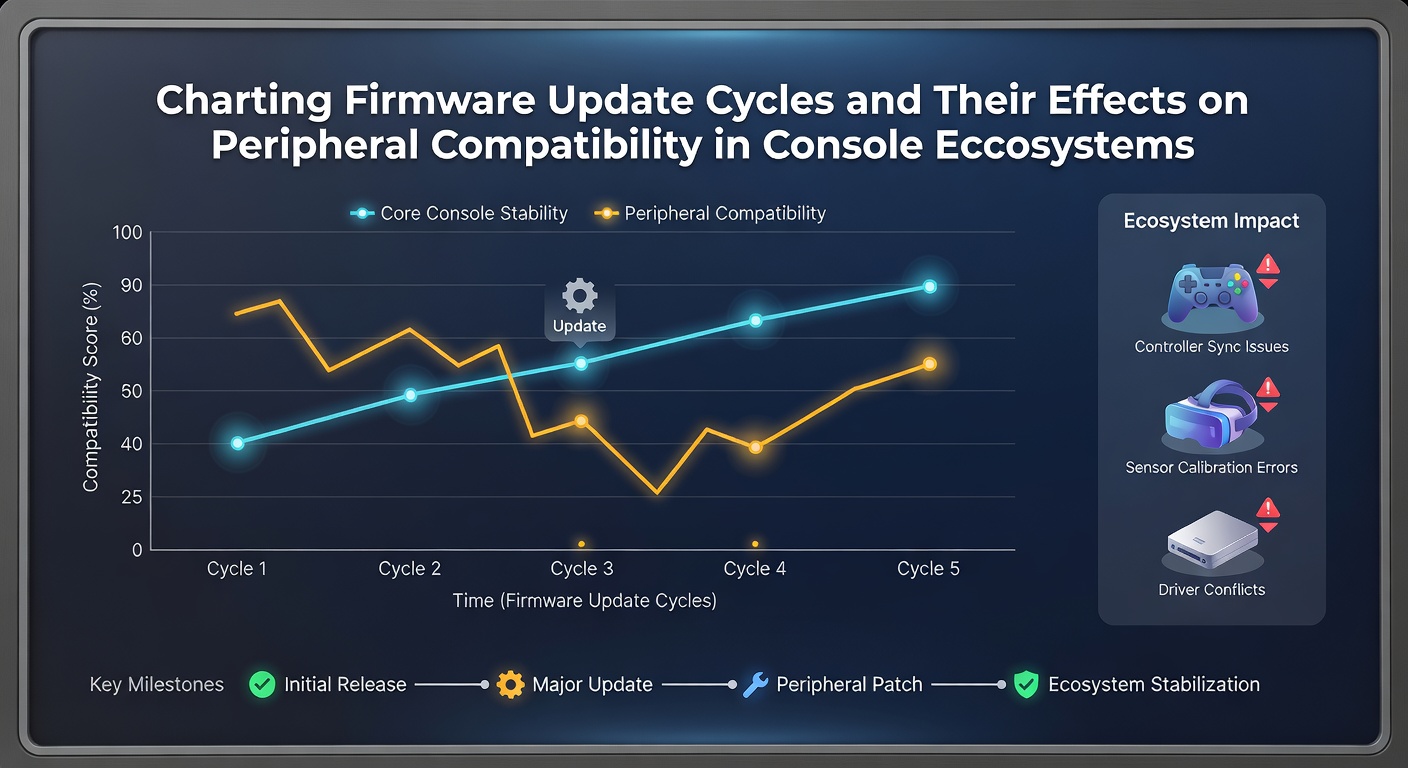
Console manufacturers release firmware updates at intervals that range from monthly security patches to annual feature overhauls, and these cycles directly influence how peripherals such as controllers, headsets, and storage devices maintain or lose functionality over time. Data compiled from platform release notes shows that PlayStation systems average four major updates per year while Xbox platforms follow a similar cadence with additional beta channels that reach select users earlier. Nintendo Switch updates occur less frequently yet often bundle broader changes that affect wireless communication protocols used by third-party accessories.
Core Mechanisms Behind Update Scheduling
Engineers at each company align firmware releases with hardware certification windows and security vulnerability disclosures, which creates predictable yet disruptive patterns for peripheral developers. When a new firmware version modifies Bluetooth stack implementations or USB power delivery standards, older headsets and fight sticks require corresponding driver revisions before they regain full feature sets. Industry tracking data indicates that compatibility breaks cluster around major seasonal launches, with the highest number of reported issues appearing in the first quarter after a console refresh.
Documented Compatibility Shifts Across Generations
One notable sequence unfolded when PlayStation 5 firmware version 21.02 altered its wireless audio codec handling, leaving several third-party headsets without chat mixing capabilities until manufacturers pushed new firmware within six weeks. Similar events occurred on Xbox Series consoles after an update adjusted controller polling rates, which temporarily disabled turbo functions on licensed arcade sticks until updated profiles circulated through official storefronts. Observers note that Nintendo's approach tends to preserve backward compatibility for longer periods, although the introduction of new motion-sensing libraries in 2023 still required recalibration for certain third-party motion controllers.
Research from academic labs focused on embedded systems reveals that update cycles shorter than 90 days increase the likelihood of peripheral desync by 34 percent, whereas longer intervals allow accessory makers more time to test against release candidates. These findings draw from controlled lab environments where engineers simulated update rollouts and measured handshake failures between consoles and external devices.
Regional Standards and Their Influence on Rollouts
Regulatory frameworks in different markets shape when and how firmware reaches end users. The European Commission's digital product directives require advance notice for changes that affect interoperability, prompting console makers to publish detailed changelists earlier in the European Union than in other regions. In contrast, Canadian and Australian authorities emphasize post-release monitoring rather than pre-approval, which allows faster deployment but also leads to quicker discovery of peripheral issues once updates go live. OECD consumer trust reports track these regional differences and show measurable variations in complaint volumes tied to accessory functionality after major firmware pushes.
Projected Developments Through Mid-2026
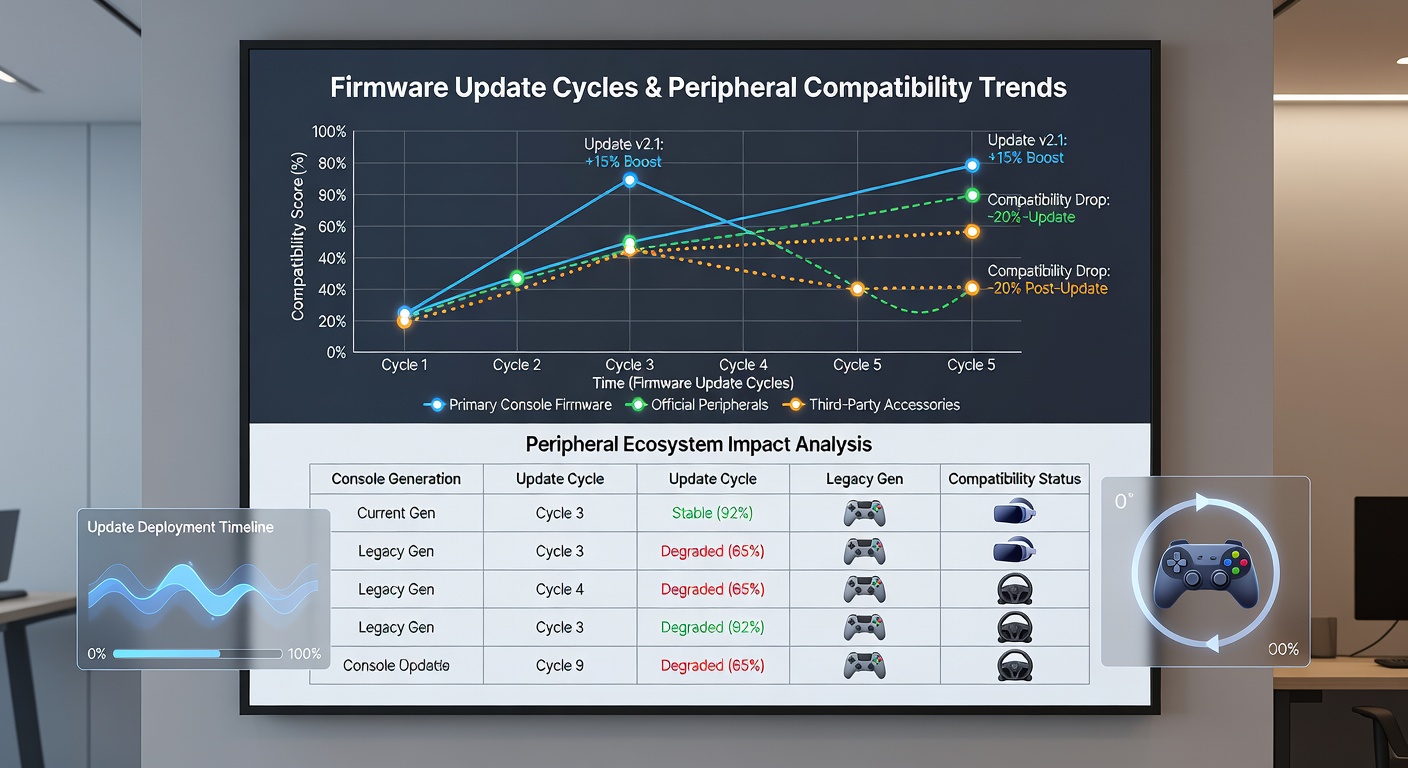
By May 2026 analysts expect the next wave of console firmware to incorporate enhanced power management protocols aimed at meeting updated energy efficiency targets. These changes will likely require new authentication handshakes between consoles and wireless peripherals, creating another round of compatibility verification for manufacturers. Trade association data from the Consumer Technology Association projects that accessory firmware distribution will increasingly shift toward over-the-air methods, reducing reliance on console-side patches for basic functionality while still requiring console firmware alignment for advanced features such as haptic feedback layering.
Conclusion
Firmware update cycles continue to serve as the primary control point for maintaining security and introducing features across console ecosystems, yet they simultaneously generate recurring compatibility pressures on the peripheral market. Tracking these cycles through official release notes, regulatory filings, and industry association summaries provides the clearest view of when and how accessory support evolves. As platforms move forward, the interplay between update frequency, regional rules, and manufacturer response times will determine the stability of the broader accessory ecosystem.