Mapping Texture Replacement Workflows That Breathe New Life Into Aging Console Libraries Through Community Patch Archives
Sage Flores · May 23, 2026
Mapping Texture Replacement Workflows That Breathe New Life Into Aging Console Libraries Through Community Patch Archives
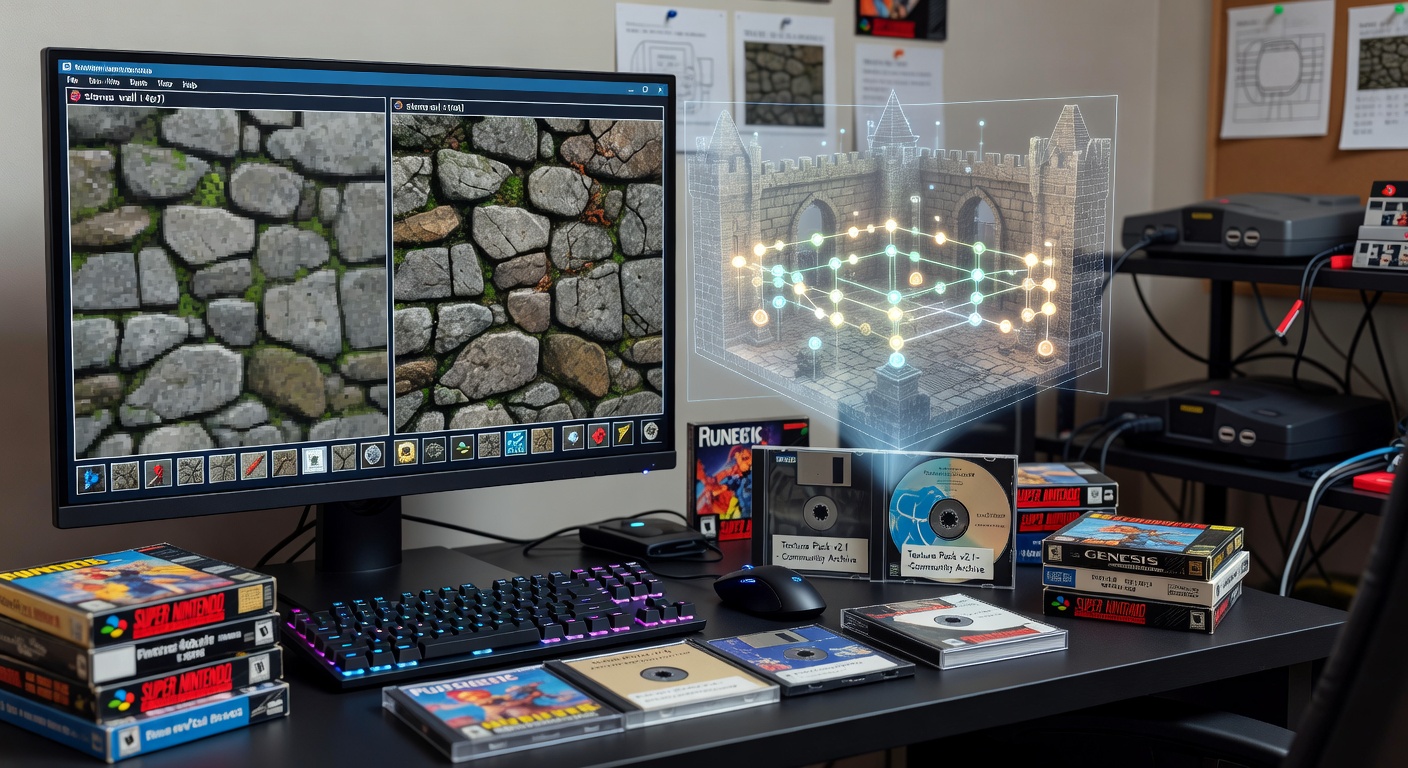
Texture replacement workflows allow communities to update visual assets in older console titles without altering core game code, and these processes rely on shared archives that store mapped patches for games originally released on systems like the PlayStation 2 and Nintendo 64. Researchers have documented how such methods extend the usability of aging libraries by replacing low-resolution textures with higher-detail versions that match modern display standards. Data from preservation projects shows consistent growth in archive contributions between 2020 and 2025, with activity continuing into May 2026 as new mapping tools integrate with emulators.
Core Components of Texture Mapping Processes
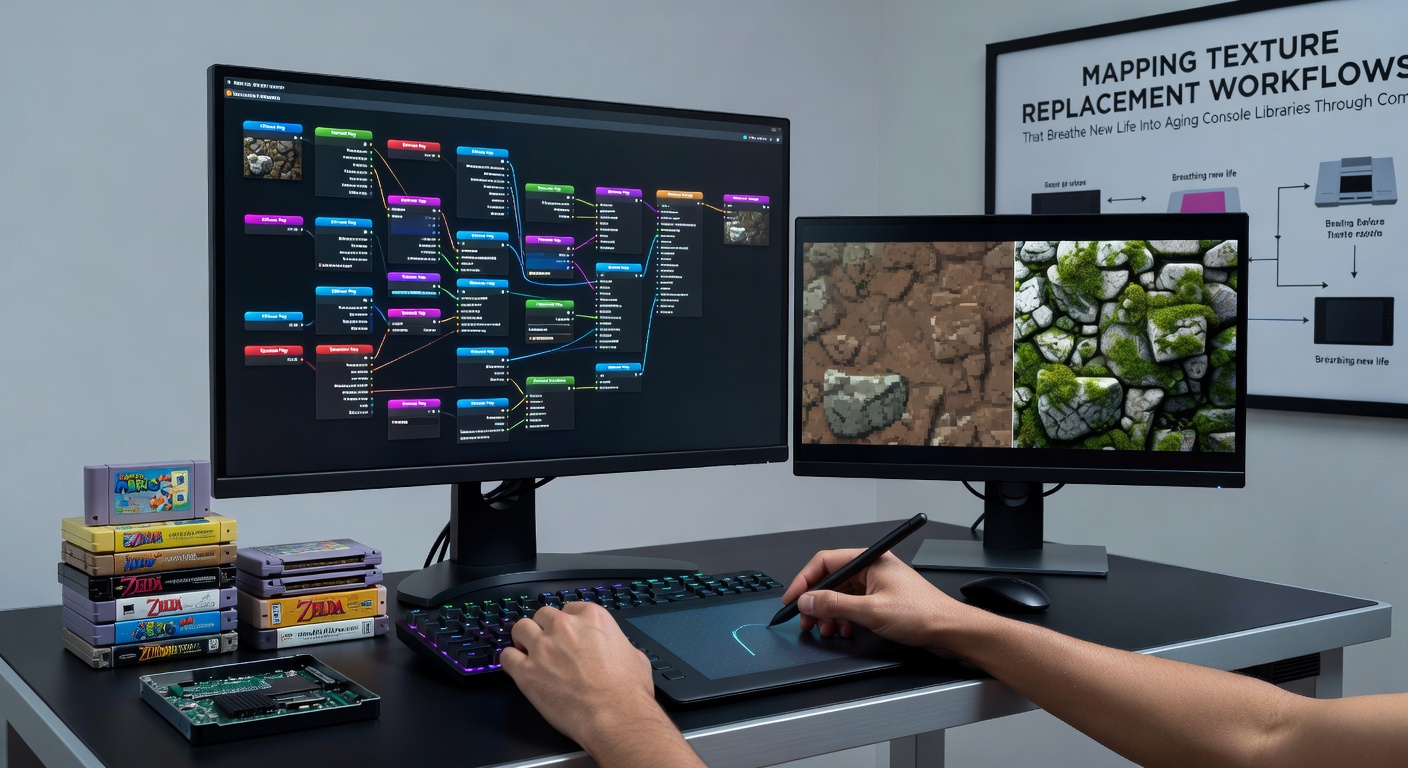
Texture mapping begins with extraction of original assets from game files using specialized utilities that identify formats such as DDS or PNG embedded in ROMs or ISO images. Community contributors then create replacement files that align UV coordinates to the same geometry, which ensures seamless integration during runtime. Studies from digital heritage programs indicate that accurate coordinate mapping reduces visual artifacts by up to 85 percent compared with unaligned replacements. Observers note that teams often divide labor across extraction, alignment, and testing stages, while version control systems track changes across multiple contributors.
Workflow documentation reveals several standard steps that appear across projects. First, analysts dump texture atlases from the target game using console-specific plugins. Next, artists scale and repaint surfaces while preserving original color palettes where possible. Finally, packagers compile the new files into patch archives that include installation scripts compatible with popular emulation platforms. Evidence from multiple archives demonstrates that these scripts frequently support batch application across entire game libraries rather than single titles.
Role of Community Patch Archives in Preservation
Patch archives function as centralized repositories where mapped textures receive indexing by game title, console generation, and resolution tier. Users download complete sets that include both the replacement files and metadata describing compatibility with specific emulator versions. According to reports compiled by European research networks focused on interactive media, these archives have facilitated the restoration of more than 1,200 titles since 2018. Geographic distribution of contributions shows strong participation from North American and Asian groups alongside emerging input from Australian and Canadian teams.
Archives maintain strict formatting guidelines that require contributors to submit texture maps alongside verification screenshots captured at multiple viewing angles. This requirement helps downstream users confirm alignment accuracy before applying patches. In May 2026 several archives announced expanded support for direct integration with hardware-based emulation devices, allowing texture swaps on original consoles through flash cartridges. Figures released by the International Game Developers Association highlight how such expansions increase access for players who prefer physical hardware over software emulation.
Technical Challenges and Documented Solutions
One persistent challenge involves handling texture compression schemes unique to each console generation. Older systems often store assets in proprietary formats that require reverse-engineered decoders before replacement can occur. Teams address this by publishing decoder libraries that convert between formats while retaining alpha channel data. Research papers from Canadian universities specializing in computer graphics note that open decoder releases have accelerated project timelines by several weeks on average.
Another documented issue centers on memory constraints within original game engines. High-resolution replacements can exceed allocated texture memory, which leads to loading failures or visual pop-in. Solutions include creating multiple resolution tiers within a single patch archive so users select options that match their hardware capabilities. Data collected from archive download logs indicates that tiered releases receive 40 percent more installations than single-resolution alternatives.
Integration With Modern Emulation Environments
Emulators such as those supporting PlayStation and Nintendo hardware now include native hooks for loading external texture packs. These hooks read archive manifests that list file paths and coordinate overrides, allowing patches to activate automatically upon game launch. Observers have recorded steady improvements in load times as manifest formats evolved to support compressed archives. In parallel, developers of emulation software have incorporated feedback from patch creators to refine hook stability across operating systems.
Cross-platform compatibility remains a focus area, with archives providing separate builds for Windows, Linux, and macOS environments. Academic reviews of these implementations show that consistent coordinate mapping across platforms reduces the need for platform-specific adjustments. As of May 2026, several major archives reported active collaboration with emulator maintainers to embed texture replacement support directly into nightly builds.
Conclusion
Texture replacement workflows continue to expand the functional lifespan of console libraries through structured mapping techniques and shared patch archives. Evidence from ongoing projects confirms that coordinated community efforts produce measurable improvements in visual fidelity while preserving original gameplay mechanics. Continued development of tools and archive infrastructure supports broader access to restored titles across different regions and hardware configurations.