Modding Communities Reshape Weapon Dynamics in Esports Tournaments Worldwide
Sage Flores · Jul 30, 2026
Modding Communities Reshape Weapon Dynamics in Esports Tournaments Worldwide
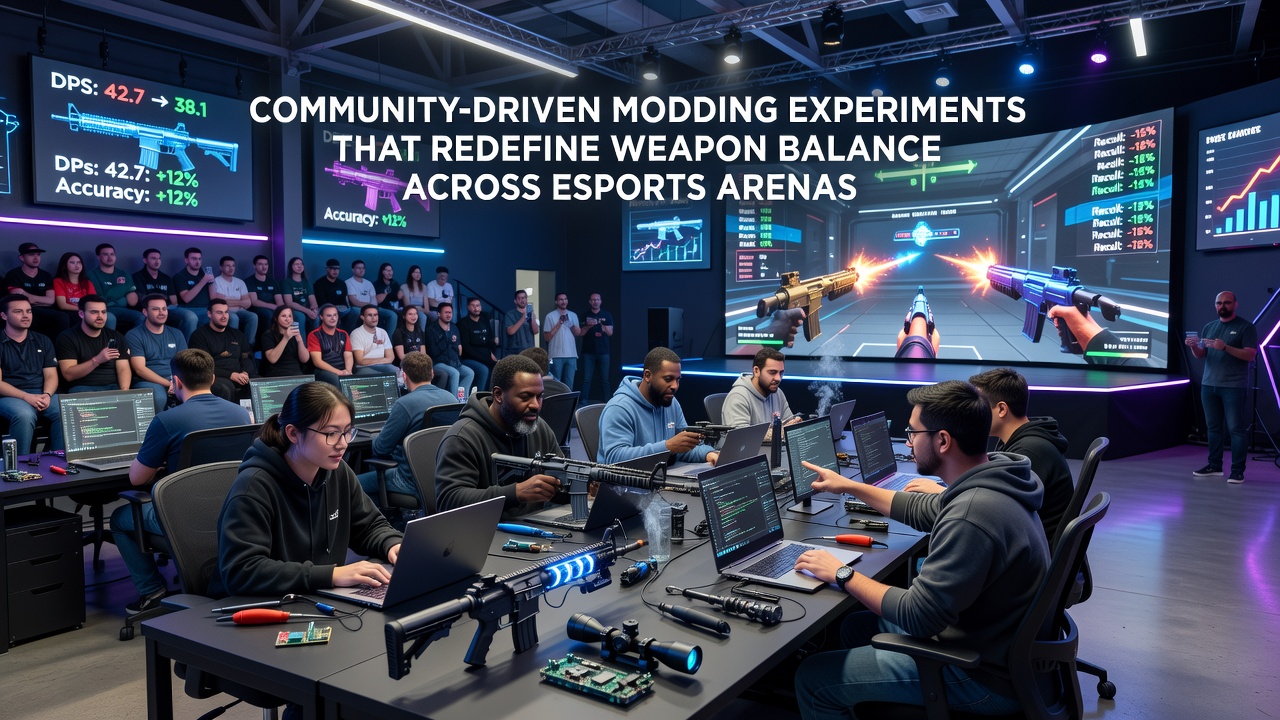
Community-driven modding has emerged as a significant force in competitive gaming circuits where participants experiment with weapon parameters to explore new balance possibilities; these efforts often take place on private servers and test environments that feed data back into broader discussions among developers and tournament organizers. Researchers from academic institutions have documented how such experiments generate datasets on damage output, fire rates, and recoil patterns that differ from official releases, while esports teams incorporate findings into practice routines without altering sanctioned matches.
Origins of Modding Experiments in Competitive Scenes
Modding communities first gained traction in titles like Team Fortress 2 and Counter-Strike variants during the early 2010s, when players created custom weapon scripts to test adjustments that official patches had not yet addressed; data collected from thousands of matches revealed patterns in usage that prompted developers to review core mechanics. By 2024, similar initiatives had spread to newer platforms, and observers note that groups in North America and Europe began sharing repositories of modified files focused specifically on arena-style weapon balance. These experiments rely on open-source tools that allow precise tweaks to variables such as projectile velocity and magazine capacity, generating logs that researchers analyze for statistical significance.
One notable project involved a collective of modders who simulated esports bracket conditions across multiple regions, recording how altered weapon spreads affected team strategies in objective-based modes; the results circulated through forums and contributed to community white papers that tournament officials later referenced during rule consultations. In July 2026, several independent leagues plan to host exhibition events that incorporate select mod-derived insights into non-official side matches, providing fresh data points while keeping main brackets on unmodified client versions.
Data Collection Methods and Analytical Approaches
Participants collect metrics through automated logging systems that track hit registration, kill-death ratios, and movement synergies under modified conditions, then aggregate the information into spreadsheets shared across Discord servers and Git repositories; this process mirrors methodologies used in academic studies of player behavior. According to reports from the Entertainment Software Association, community datasets have occasionally aligned with internal testing conducted by studios, leading to faster iteration on balance patches for games that support esports ecosystems. Analysts at institutions such as the University of California have examined these crowdsourced records and found correlations between modded weapon tweaks and shifts in pick rates that later appeared in official updates.
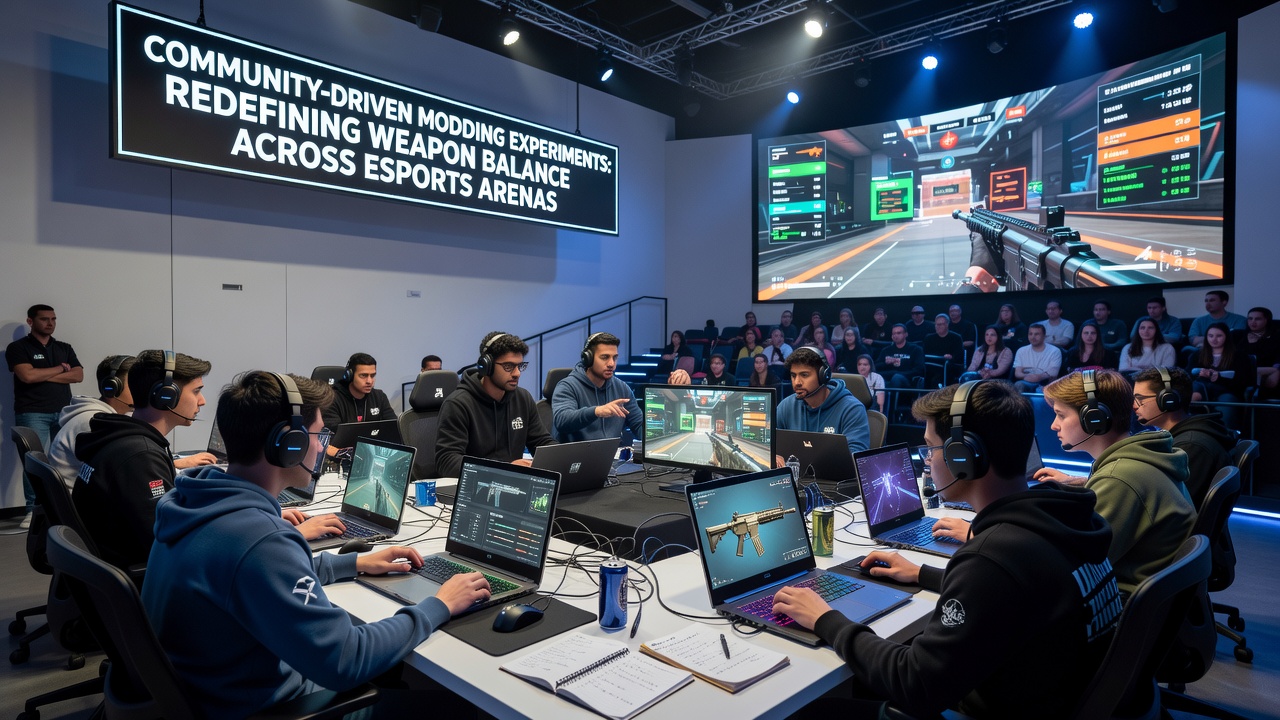
What's interesting is how these experiments often cross regional boundaries, with contributors from Australia and Canada adding localized latency simulations to the test environments; the combined data sets reveal how network conditions interact with weapon parameters in ways that single-region testing might overlook. Tournament organizers monitor these developments through public repositories, though they maintain strict separation between modded content and live competitive play to preserve integrity standards.
Impact on Tournament Rules and Developer Responses
Esports governing bodies have begun acknowledging community findings in advisory documents, citing examples where mod experiments highlighted overpowered configurations that later received official adjustments; this feedback loop operates without direct integration of modded code into sanctioned clients. Industry groups such as the International Game Developers Association have published summaries of how modder insights influence design pipelines, noting that several major titles adopted revised recoil curves after community datasets demonstrated consistent advantages in high-level play. Figures from European digital economy reports indicate that modding activity accounts for measurable portions of player engagement outside ranked queues, providing supplementary testing volume that studios cannot replicate internally.
Yet the separation remains clear: official esports arenas continue to enforce vanilla weapon states, while modding experiments occur in parallel spaces that serve educational and exploratory purposes. Participants document their processes in detailed changelogs that other groups replicate, creating iterative cycles of refinement that accelerate understanding of balance variables across different game engines.
Future Trajectories for Modding Integration
Looking ahead, analysts anticipate expanded collaboration between modding collectives and academic researchers who apply machine learning to the growing volume of balance data; these partnerships could produce predictive models that forecast how specific weapon changes would perform under tournament conditions. Regulatory discussions in various jurisdictions continue to focus on intellectual property boundaries around modded assets, yet community projects persist within clearly defined non-commercial frameworks. In July 2026, planned showcases will highlight aggregated results from ongoing experiments, offering esports stakeholders additional reference points without altering core competition protocols.
Conclusion
Community-driven modding experiments continue to generate valuable information on weapon balance that circulates through esports ecosystems, even as official arenas preserve unmodified standards; the data flows from grassroots testing environments into broader analytical discussions that influence developer decisions over time. Researchers and organizers alike track these developments for insights that complement traditional internal testing, while maintaining clear boundaries that protect competitive integrity across global circuits.