Observing Shifts in Game Balance Through Collective Player Advocacy in Digital Arenas
Zara Roth · Aug 15, 2026
Observing Shifts in Game Balance Through Collective Player Advocacy in Digital Arenas
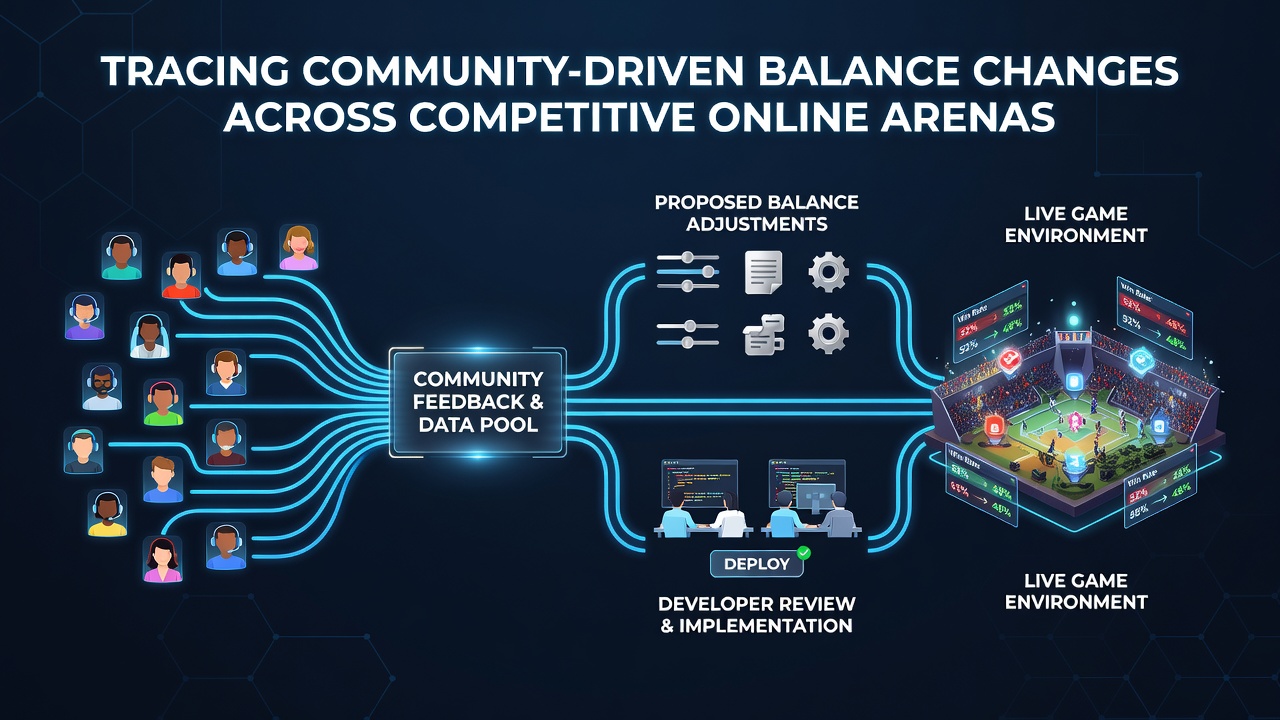
Competitive online arenas have long relied on data streams from ranked ladders and tournament logs to inform equilibrium adjustments, yet community advocacy channels add layers of qualitative insight that shape how developers prioritize changes across titles like League of Legends and Counter-Strike. Forums, subreddit threads, and dedicated feedback portals collect thousands of player observations each week, and these inputs merge with internal telemetry to guide patch cycles that maintain fair play across skill brackets. Researchers at Stanford University have documented how aggregated suggestions from high-level competitors often accelerate revisions to overpowered mechanics, while data from the European Games Developer Federation shows similar patterns in European and Asian server regions.
Historical Patterns in Community Feedback Loops
Early multiplayer titles such as StarCraft and Quake established basic patch processes driven by tournament organizers and developer teams, but the rise of always-connected platforms expanded participation to include global player bases that submit detailed match analyses. Observers note that by the mid-2010s, major studios began publishing public test realms where community members could trial proposed adjustments and report discrepancies in real time. This approach evolved further when developers integrated automated reporting tools that flag recurring complaints about specific characters or maps, allowing teams to cross-reference those flags against win-rate statistics from ranked play.
Take one developer studio that released a major fighting game update in 2019 after community spreadsheets highlighted frame-data inconsistencies that internal testing had overlooked. Subsequent revisions addressed those issues and led to measurable drops in player churn rates according to post-patch analytics shared by the studio.
Mechanisms That Translate Player Voices into Code Changes
Modern pipelines combine multiple input sources so that balance teams receive structured summaries rather than raw forum posts. Survey instruments distributed through official client interfaces ask competitors to rate specific abilities on scales of fairness and fun, and the resulting datasets feed into machine-learning models that cluster similar concerns. Meanwhile, professional esports organizations maintain their own analytics departments that share anonymized match data with publishers under formal agreements, creating an additional verification layer that strengthens the case for targeted fixes.
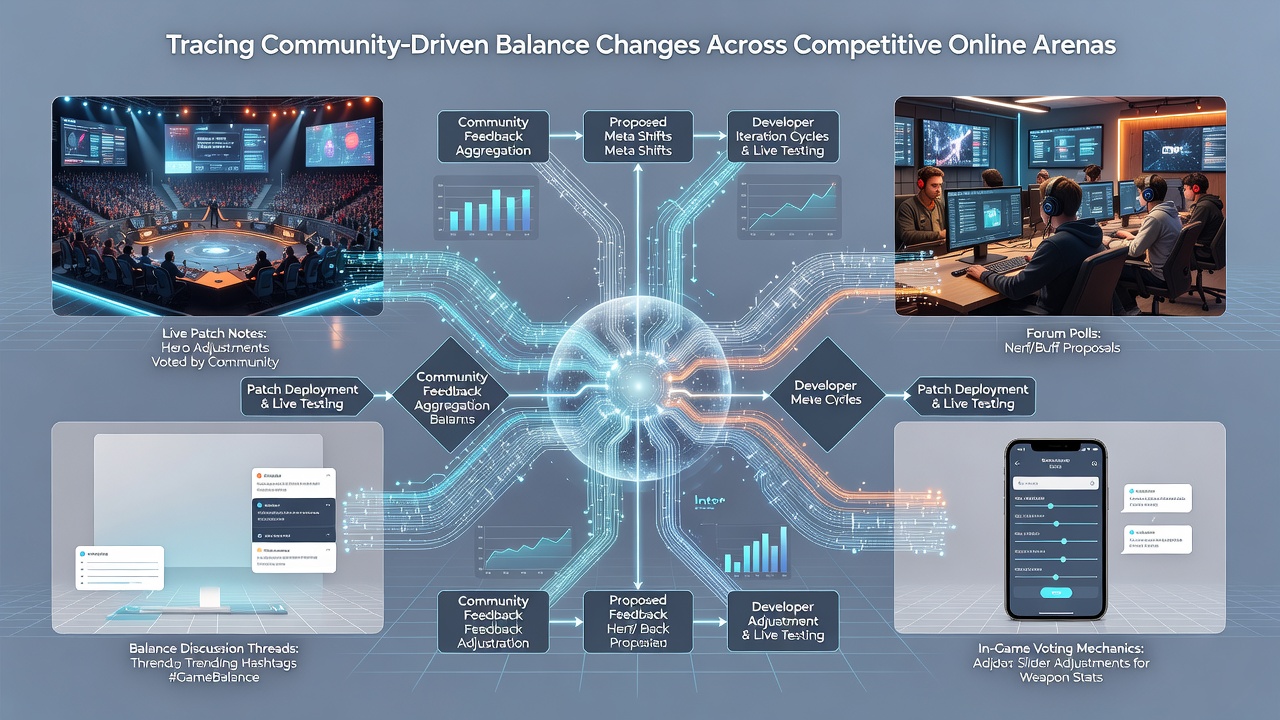
Those who've studied these systems point out that public beta environments serve as critical proving grounds where thousands of concurrent players generate performance logs that developers compare against live-server baselines. When a proposed nerf or buff receives consistent negative feedback across multiple regions, teams often revert or modify the adjustment before final deployment. This iterative cycle has become standard practice at studios managing live-service titles with monthly or quarterly cadence updates.
Case Examples from Recent Seasons
In one documented instance, a popular battle-royale title adjusted weapon recoil patterns after community-submitted video compilations demonstrated inconsistent hit-registration across different connection qualities. The studio confirmed the issue through server-side replays and issued a hotfix within weeks. Another example involves a multiplayer online battle arena game where support-class win rates spiked following a minor item change; player forums compiled statistical breakdowns that prompted the development team to recalibrate the item values in the next scheduled patch.
August 2026 brought additional visibility to these processes when several prominent titles synchronized their balance updates with major championship events, allowing organizers to incorporate last-minute equilibrium shifts based on preliminary community data gathered during open qualifiers. Figures from tournament operators revealed that viewer retention improved when matches featured more diverse character selections after those adjustments.
Geographic and Cultural Variations in Feedback Impact
Regional differences influence which suggestions receive priority, because player populations in East Asia, North America, and Europe emphasize distinct aspects of competitive integrity. Asian servers often focus on mechanical execution and frame-perfect interactions, whereas Western communities highlight strategic depth and counterplay options. Developers accommodate these variances by maintaining separate balance branches that undergo localized testing before global rollout, and cross-regional working groups review consolidated reports to ensure core gameplay remains consistent.
Academic analyses from multiple institutions confirm that transparent communication about which community proposals were adopted or declined correlates with higher long-term engagement metrics across all tested regions.
Conclusion
Tracing community-driven balance changes reveals an interconnected system where player observations, statistical modeling, and developer oversight converge to sustain competitive integrity across evolving digital arenas. Continued refinement of feedback channels and verification methods supports ongoing adaptation as new titles enter the ecosystem and existing ones expand their feature sets. Data shared by industry groups and research centers continues to document how these collaborative processes affect match outcomes and participant satisfaction over successive seasons.