Player Data Patterns in Esports Tournaments and Modded Server Networks
Ben Klein · Jul 25, 2026
Player Data Patterns in Esports Tournaments and Modded Server Networks
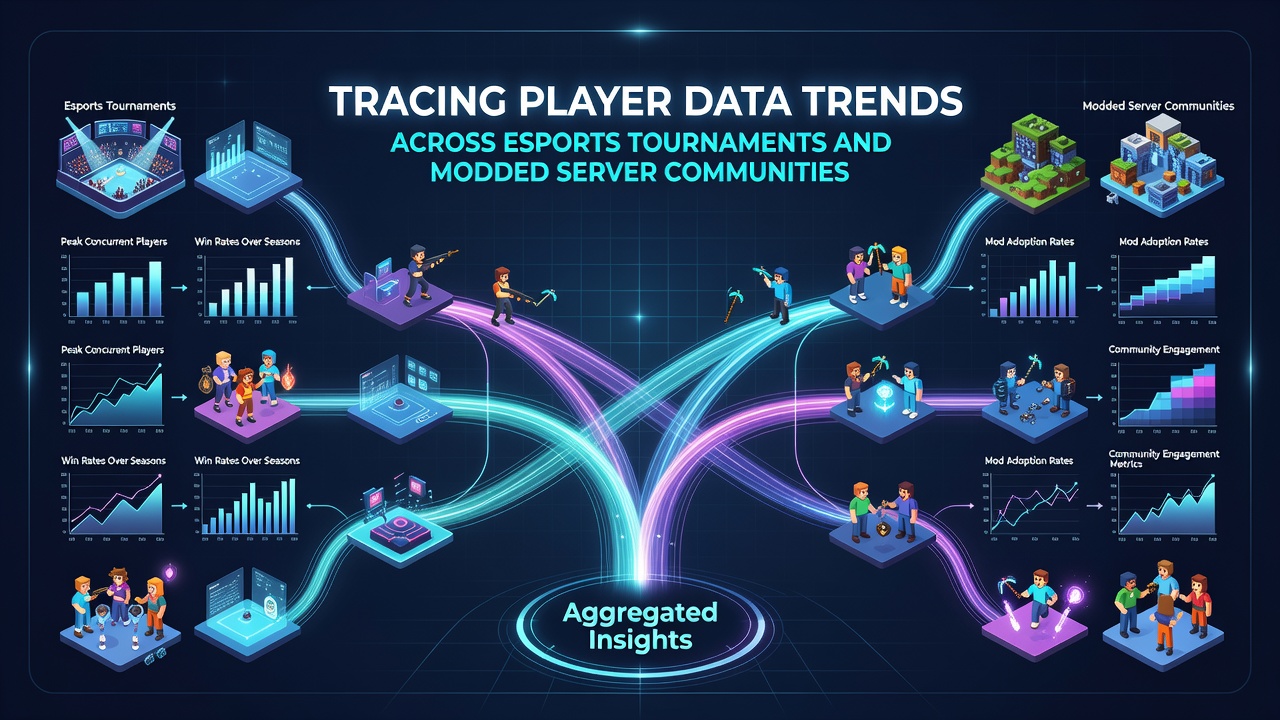
Player data tracking has expanded rapidly in both professional esports circuits and community-run modded servers since the mid-2010s, with organizations collecting metrics on match duration, win rates, and session lengths. Researchers at institutions across North America and Europe have documented how these datasets reveal consistent participation rhythms that shift according to game title, region, and time of year.
Core Metrics Collected in Tournament Settings
Esports leagues compile statistics that include average kills per minute, player retention across bracket stages, and peak concurrent viewers during live broadcasts. Data from major events held in 2025 showed that teams competing in best-of-five series maintained higher engagement levels than those in single-elimination formats, while viewer drop-off occurred most sharply after the first thirty minutes of a match. Figures released by the North American Esports Alliance indicate that regional qualifiers attract 40 percent more first-time participants than international finals, a pattern that held steady through early 2026.
Analysts also monitor hardware telemetry such as frame rates and input latency during tournaments because these elements correlate with performance consistency. When organizers introduced standardized equipment checks in 2024, recorded instances of disconnects fell by 18 percent across monitored events, according to internal league reports.
Trends Observed in Modded Server Communities
Modded servers operate under different data collection rules, often relying on volunteer administrators who log player hours, custom map completion rates, and chat activity volumes. Communities centered on survival or role-playing modifications record longer average session times than vanilla servers, with some groups reporting median play sessions exceeding four hours during weekend peaks. A study conducted by the University of Melbourne's Digital Games Research Centre found that players who joined modded servers through friend referrals stayed active 2.3 times longer than those who arrived via public listings.
July 2026 brought notable spikes in several long-running modded communities as developers released major content updates for established titles, prompting temporary increases in new account registrations. Server operators tracked these surges through simple API integrations that exported daily player counts without requiring advanced infrastructure.
Comparative Analysis Across Both Environments
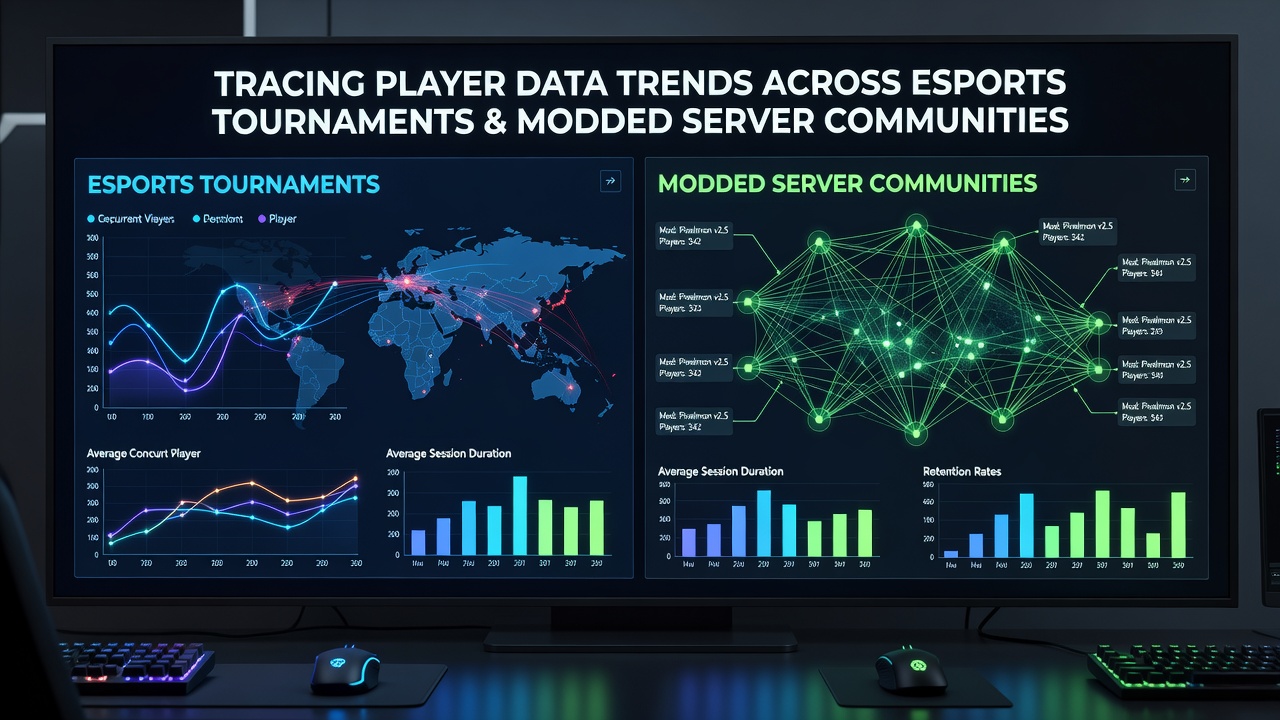
Side-by-side examination of tournament and modded server datasets highlights several overlapping behaviors. Both settings show elevated activity during evening hours in their respective time zones, and both experience measurable declines when competing entertainment options such as major sports broadcasts occur. Yet modded servers demonstrate greater flexibility in adapting to player feedback, with administrators frequently adjusting rulesets within days of identifying dissatisfaction through chat logs or forum threads.
Esports organizations, by contrast, maintain stricter schedules tied to sponsorship contracts and broadcast windows. This rigidity produces more predictable data curves but limits the ability to experiment with format changes mid-season. Observers note that hybrid events combining tournament brackets with community modded lobbies have begun testing these boundaries in 2026, generating datasets that blend structured competition with open-ended play.
Tools and Methods for Data Aggregation
Developers supply official APIs that pull match histories directly from game clients, while third-party platforms overlay additional layers such as social graph analysis and sentiment tracking from public streams. In modded environments, custom plugins capture granular events like item crafting sequences or territorial control shifts that official tools overlook. Academic teams in Canada and Australia have published open-source frameworks that standardize these disparate data streams, allowing researchers to compare tournament performance against community server longevity without proprietary restrictions.
Privacy regulations in the European Union require explicit consent for certain telemetry categories, which has prompted server operators to implement opt-in toggles that still yield representative sample sizes for trend analysis. Similar frameworks in other jurisdictions continue to evolve, shaping how much detail remains available for longitudinal studies.
Future Data Integration Possibilities
Cross-referencing tournament results with modded server activity offers potential for identifying emerging talent pools before they enter professional circuits. Several scouting programs already review public modded leaderboards to surface consistent high performers, then invite them to regional qualifiers. The resulting datasets could refine matchmaking algorithms and reduce skill gaps that currently cause early exits in both competitive and casual settings.
Conclusion
Comprehensive tracking across esports tournaments and modded server communities continues to mature as new tools standardize collection practices and regulatory environments clarify consent requirements. The patterns documented through 2026 demonstrate measurable differences in session length and retention drivers, yet also reveal shared rhythms in daily and seasonal participation that cut across both domains. Continued aggregation of these datasets supports more precise scheduling, format adjustments, and community management strategies without relying on anecdotal observation alone.