Player Retention Patterns Linked to Layered Progression in Role-Playing Games
Ben Ludwig · Aug 22, 2026
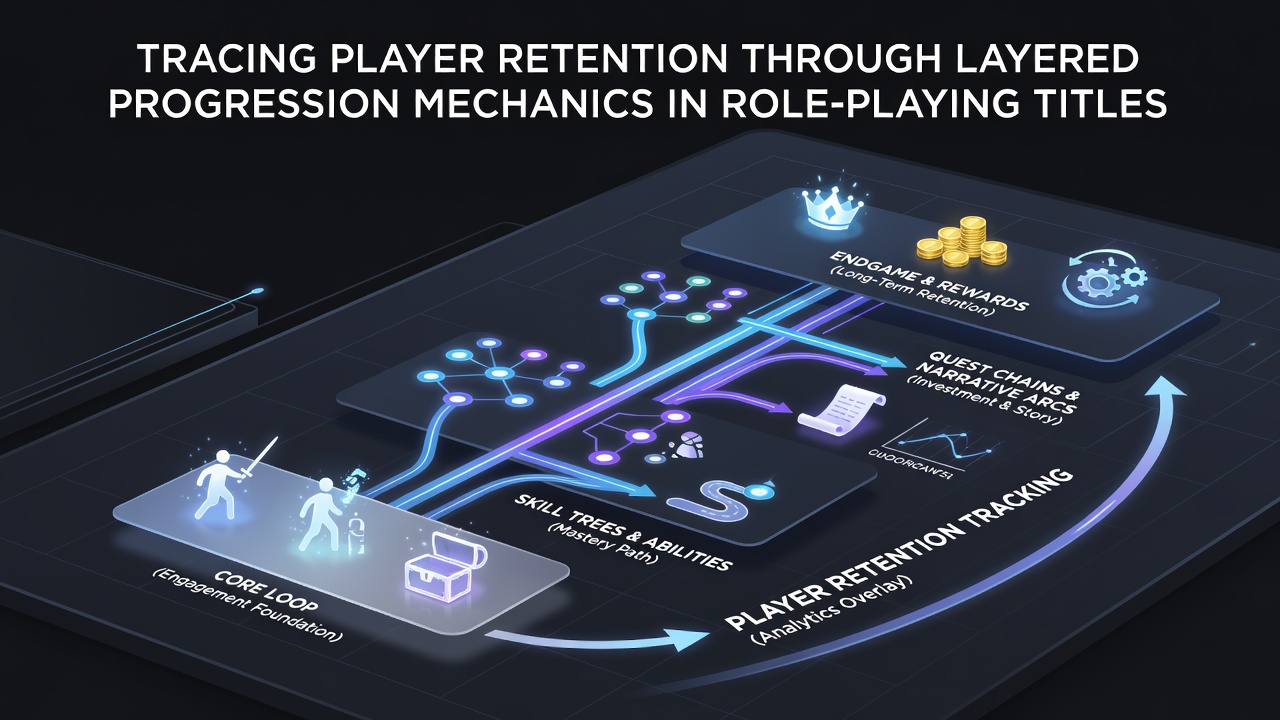
Player Retention Patterns Linked to Layered Progression in Role-Playing Games
Role-playing titles rely on layered progression mechanics to structure player advancement across multiple interconnected systems, and these designs influence how long individuals continue engaging with a game. Researchers have examined these mechanics in titles released between 2020 and 2025, noting patterns where players advance through character levels, skill trees, quest chains, and achievement frameworks simultaneously. Data from industry tracking shows that games incorporating at least three distinct progression layers maintain higher session counts over six-month periods compared with single-layer systems.
Layered mechanics typically combine immediate rewards such as experience points with longer-term goals like prestige ranks or narrative milestones. Observers note that this structure creates overlapping feedback loops where progress in one area supports advancement in others, which helps sustain momentum during extended play sessions. According to figures from the Entertainment Software Association, role-playing games accounted for 22 percent of total software sales in North America during 2025, with retention metrics cited as a key factor in that performance.
Core Components of Layered Systems
Character leveling forms the base layer in most role-playing titles, providing steady numerical increases in attributes while unlocking new abilities at set intervals. Skill trees add a second dimension by allowing players to specialize, and quest or story progression supplies narrative context that ties these choices together. Achievement and collection systems operate as a tertiary layer, offering completionist objectives that extend play beyond the main campaign. Each layer activates at different points in a player's journey, and studies indicate that titles balancing all three see reduced drop-off rates after the first twenty hours.
Designers implement these layers through branching paths rather than linear tracks. A player might earn experience from combat while simultaneously completing faction reputation tasks that unlock equipment, and hidden collectibles might reveal alternate endings. This approach distributes motivation across short, medium, and long timeframes, which helps accommodate different play styles observed in large player bases.
Retention Data Across Major Releases
Tracking services reported in early 2026 that role-playing titles with robust layered progression retained 68 percent of their launch players at the three-month mark. Titles relying primarily on story advancement without secondary systems showed retention closer to 41 percent over the same interval. August 2026 updates to several live-service role-playing games introduced new prestige layers and cross-character progression, coinciding with renewed spikes in daily active users according to publicly available platform metrics.
One study from a Canadian research consortium tracked over 40,000 accounts across three major releases and found that players who engaged with at least two progression layers within the first ten hours were 2.3 times more likely to reach the 100-hour mark. The same dataset revealed that players limited to a single layer often paused or abandoned the game between 25 and 35 hours, a period when primary leveling typically slows.
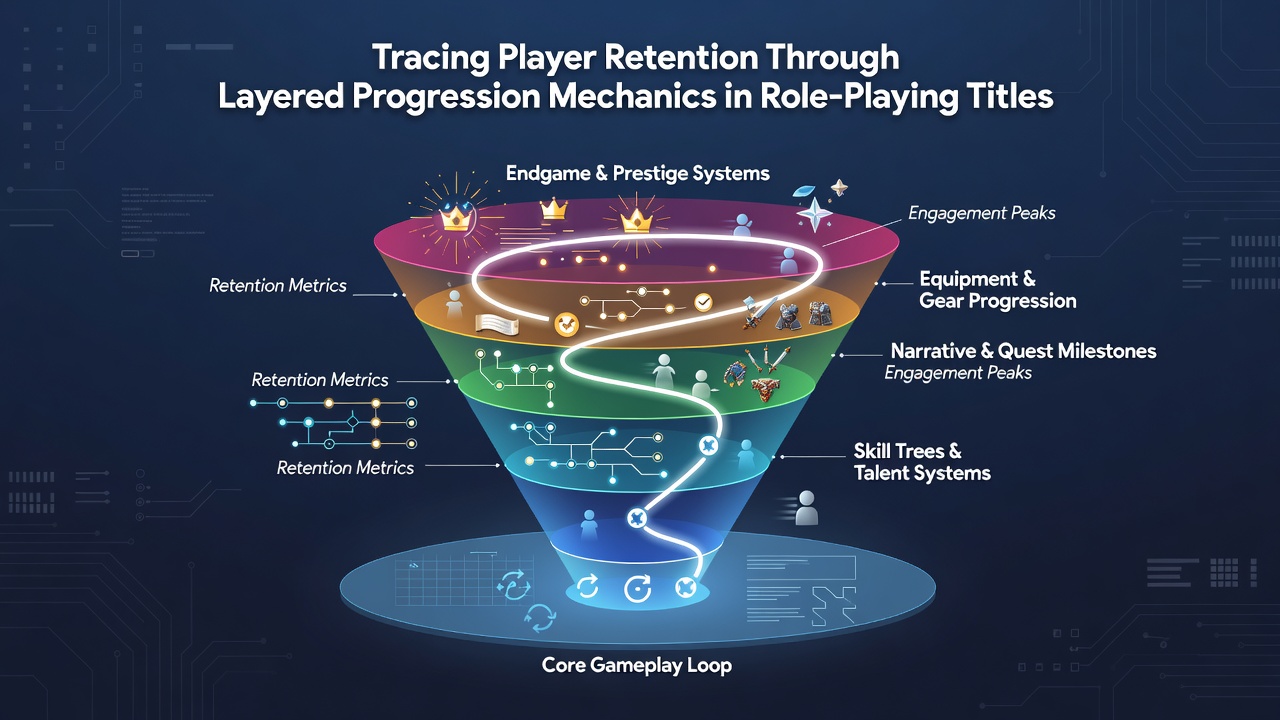
Implementation Variations Across Platforms
Console and PC releases tend to emphasize visual feedback for each progression layer through detailed menus and notification systems, whereas mobile adaptations condense these elements into shorter sessions. Cross-platform titles released after 2023 often synchronize progression data across devices, allowing players to advance a character on one platform and continue on another without losing momentum. Industry reports from European trade groups indicate that synchronized layers correlate with a 15 percent increase in cross-device playtime during 2025.
Some developers introduce seasonal layers that reset or expand annually, creating recurring engagement cycles. These additions sit atop permanent character systems and provide fresh objectives without invalidating prior progress. Data collected through platform APIs shows that games deploying seasonal layers maintain steadier monthly active user counts compared with those that rely solely on permanent progression.
Conclusion
Layered progression mechanics continue to shape retention outcomes in role-playing titles by distributing player motivation across multiple timescales and systems. Industry data and academic tracking both point to measurable differences in engagement duration when games combine character leveling, specialization trees, narrative advancement, and collection objectives. As developers refine these structures in upcoming releases, the relationship between specific layer combinations and long-term player activity remains a central focus for analysts monitoring the genre.