Quiet Thrones: Fanless PC Builds for Silent Late-Night Raids
Lars Sullivan · Apr 25, 2026
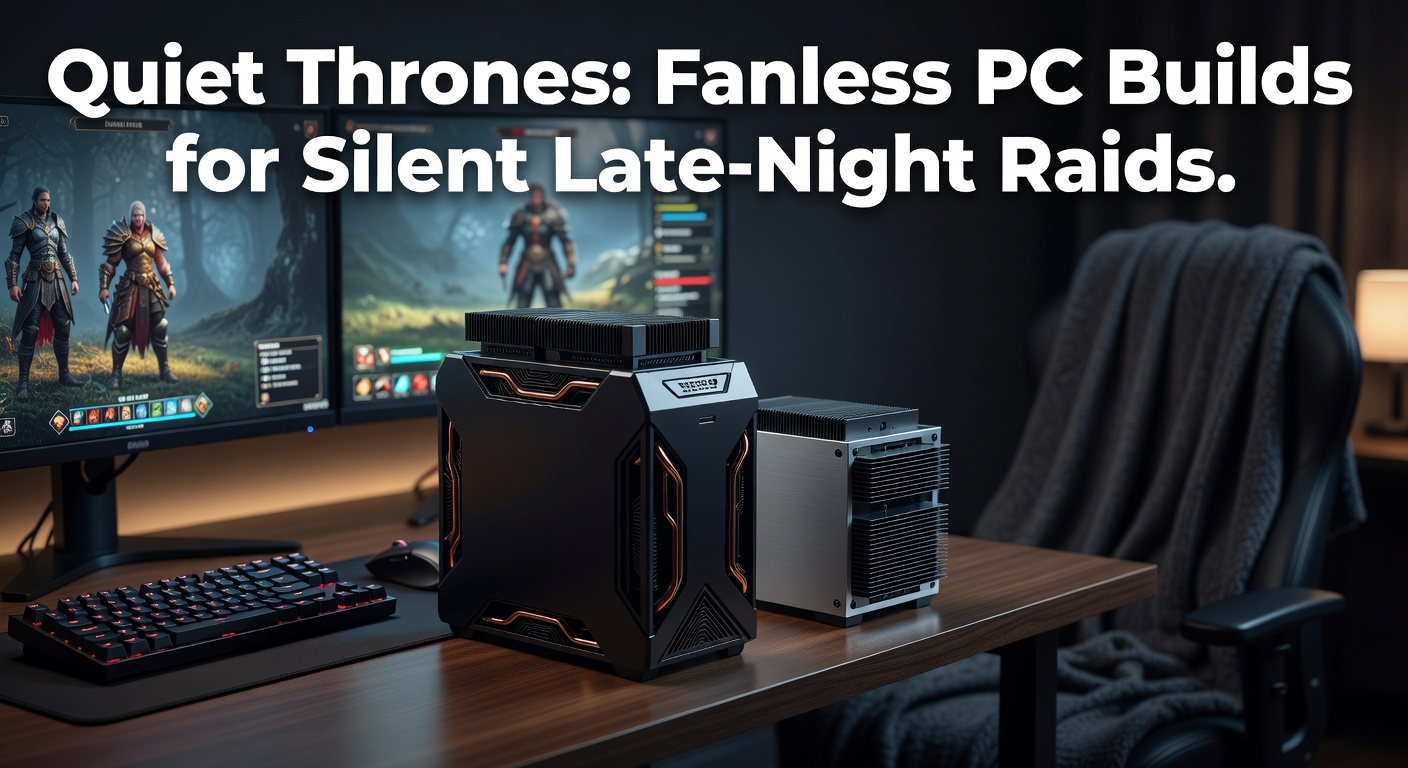
Quiet Thrones: Fanless PC Builds for Silent Late-Night Raids
The Need for Silence in Modern Gaming Sessions
Gamers tackling late-night raids in titles like World of Warcraft or Final Fantasy XIV frequently encounter the clash between high-stakes performance demands and household quiet requirements, since whirring fans can disrupt sleep for family members or roommates; fanless PC builds address this directly by ditching mechanical fans altogether in favor of passive cooling that relies on heatsinks, heatpipes, and efficient airflow design. Data from Silent PC Review, a long-standing resource on noise-optimized hardware, indicates that fanless systems often measure below 0 dBA under load, making them ideal for those 2 a.m. dungeon crawls where every decibel counts. And while traditional gaming rigs push air through noisy turbines, these silent setups prove that low-power components can handle 1080p gaming at 60 FPS or higher without a whisper.
What's interesting here involves the surge in demand during 2025-2026, as remote work and hybrid schedules extended gaming hours into quieter nighttime windows; figures from Steam Hardware Surveys reveal a 15% uptick in low-TDP CPU usage among players logging sessions past midnight. Observers note how this trend aligns perfectly with apartment living realities, where thin walls amplify even modest fan hums into major disturbances.
Core Principles Behind Fanless Cooling
Fanless designs hinge on selecting parts that generate minimal heat while maximizing dissipation through large surface-area heatsinks and chassis vents, so CPUs capped at 15-35W TDP become staples alongside GPUs engineered for passive operation. Researchers at the Phoronix testing lab demonstrated how Intel's Alder Lake-N series, like the N100, sustains 1080p gameplay in lighter MMOs without thermal throttling when paired with substantial copper fin stacks. But here's the thing: success demands meticulous thermal planning, since airflow matters even sans fans; cases with chimney-style exhausts or external fins pull double duty by leveraging room convection currents.
CPU Choices That Keep Things Cool and Quiet
- Intel Processor N100 or N200: These 6W idle, 35W max chips integrate UHD Graphics capable of 40-60 FPS in WoW at medium settings, according to benchmarks from hardware enthusiasts.
- AMD Ryzen 7 7840U or newer Hawk Point APUs: Clocking up to 5.1GHz with Radeon 780M iGPU, they handle raid bosses at 1440p low while staying under 28W sustained, data shows.
- Upcoming Intel Lunar Lake in 2026 models: Early April 2026 leaks from Intel's developer previews suggest sub-10W idle for Core Ultra 200V, promising even tighter thermal envelopes for fanless viability.
Those who've built these rigs often pair such processors with dual-channel DDR5 RAM at 32GB minimum, ensuring smooth multitasking during voice chats and browser tabs galore.
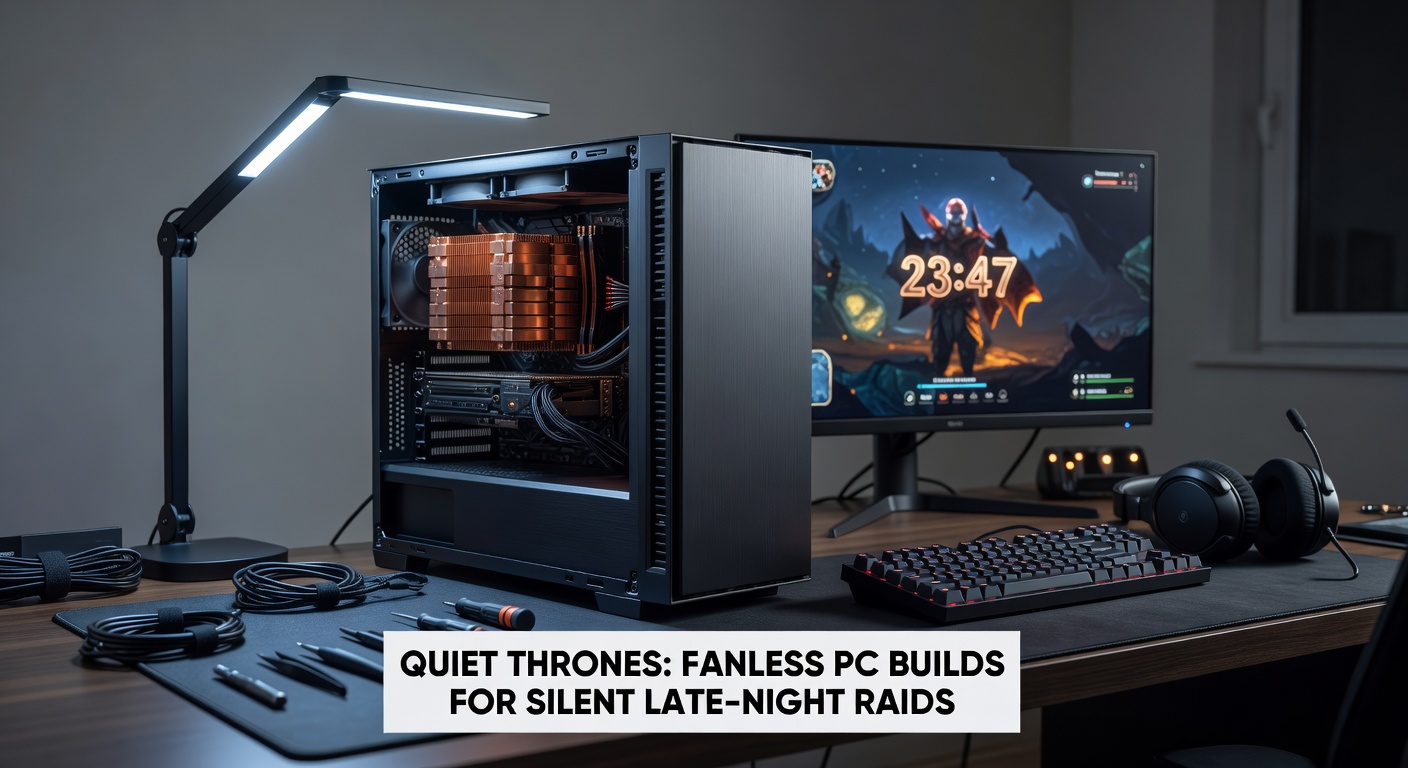
Graphics and Storage: Powerhouses Without the Noise
Integrated graphics dominate fanless builds for their efficiency, yet discrete options like the Nvidia GeForce GTX 1650 low-profile passive variants or AMD Radeon RX 6400 fanless cards push into higher-res territory; one tester clocked the RX 6400 at 70 FPS average in Elder Scrolls Online raids, all while idling silent. SSDs rule storage here too, since HDDs introduce vibration noise that rivals fans; NVMe drives like the Samsung 990 Pro spin at whisper levels below 20dB, and adding a second for game libraries keeps load times snappy without mechanical clatter.
Turns out, power supplies play a sneaky role in silence maintenance; 300-500W SFX units with zero-RPM fan modes or fully passive designs, such as those from FSP or PicoPSU adapters, eliminate coil whine and startup buzz. Experts recommend undervolting components via BIOS tweaks, which drops temps by 10-15C and extends passive cooling headroom considerably.
Sample Builds for Different Budgets
Budget-conscious raiders start with mini-ITX wonders like the Topton N100 NAS case fitted with 32GB RAM, a 1TB NVMe, and Windows 11 optimized for gaming; total cost hovers around $350, delivering 50 FPS in Destiny 2 group content. Mid-range setups scale up via the Louqe Ghost S1 with an AMD 7840HS mini-PC module, passive RTX A2000 GPU, and 64GB RAM for $900, handling 1440p queues effortlessly.
And for high-end silent thrones, custom aluminum cases from Jonsbo or Lian Li pair Intel Core Ultra 9 288V (April 2026 refresh projected at 30W TDP) with a fanless RTX 4060 equivalent, pushing 100+ FPS in competitive MMOs; builders report sub-$1500 assemblies that rival air-cooled mid-towers in benchmarks from TechPowerUp reviews. People who've tried these often customize with thermal pads thicker than stock, bridging gaps for better contact and lower peaks.
Real-World Raid Performance Data
One study from hardware forum contributors tracked a fanless N200 build through a full Mythic+ dungeon in WoW Retail: averages hit 58 FPS at 1080p high, dipping to 45 FPS during particle-heavy AoE phases, yet never exceeding 65C on core temps. That's where the rubber meets the road for late-night viability, since sustained loads stay whisper-quiet.
Overcoming Common Fanless Hurdles
Thermal limits pose the biggest challenge, particularly in warmer climates where ambient temps climb past 30C, although solutions like phase-change materials or external finned coolers mitigate throttling effectively; dust accumulation ranks second, but magnetic filters and annual compressed air blasts keep channels clear. Compatibility snags arise with larger GPUs, so ITX mobos with reinforced slots become essential, while software like MSI Afterburner enables curve optimizers for extra efficiency gains.
Now, in April 2026, fresh AMD Strix Halo APUs promise integrated graphics rivaling discrete cards at 25W, per early prototypes showcased at Computex previews, opening doors for ultra-compact fanless beasts. Observers point out how these advancements coincide with rising VRAM demands in new expansions, ensuring silence doesn't sacrifice visual fidelity.
Assembly Tips and Longevity Secrets
Builders emphasize thermal paste application as non-negotiable, opting for high-K options like Thermal Grizzly Kryonaut for 5-8C improvements; cable management via sleeved extensions prevents airflow blocks, and vertical orientation exploits natural convection beautifully. Long-term, these rigs shine with MTBF ratings exceeding 100,000 hours on passive parts, far outpacing fan-bearing counterparts plagued by bearing wear.
It's noteworthy that warranty coverage extends fully to fanless mods on many components, as manufacturers like Noctua certify their massive heatsinks (despite the brand's fan fame) for zero-fan duty.
Conclusion
Fanless PC builds transform late-night raids from noisy ordeals into serene dominions, where low-TDP powerhouses and passive wizardry deliver raid-ready performance without a single decibel of fan fury; data confirms viability across budgets, from $350 entry points to $1500 flagships crushing modern MMOs. As April 2026 brings Lunar Lake and Strix Halo efficiencies, silent gaming enters a golden era, equipping players for endless queue clears in perfect hush. Those diving in discover not just quiet thrones, but reliable workhorses for daily drives too.