Sound Layering Strategies That Enhance Tension in Story-Driven Game Experiences
Ben Klein · Aug 20, 2026
Sound Layering Strategies That Enhance Tension in Story-Driven Game Experiences
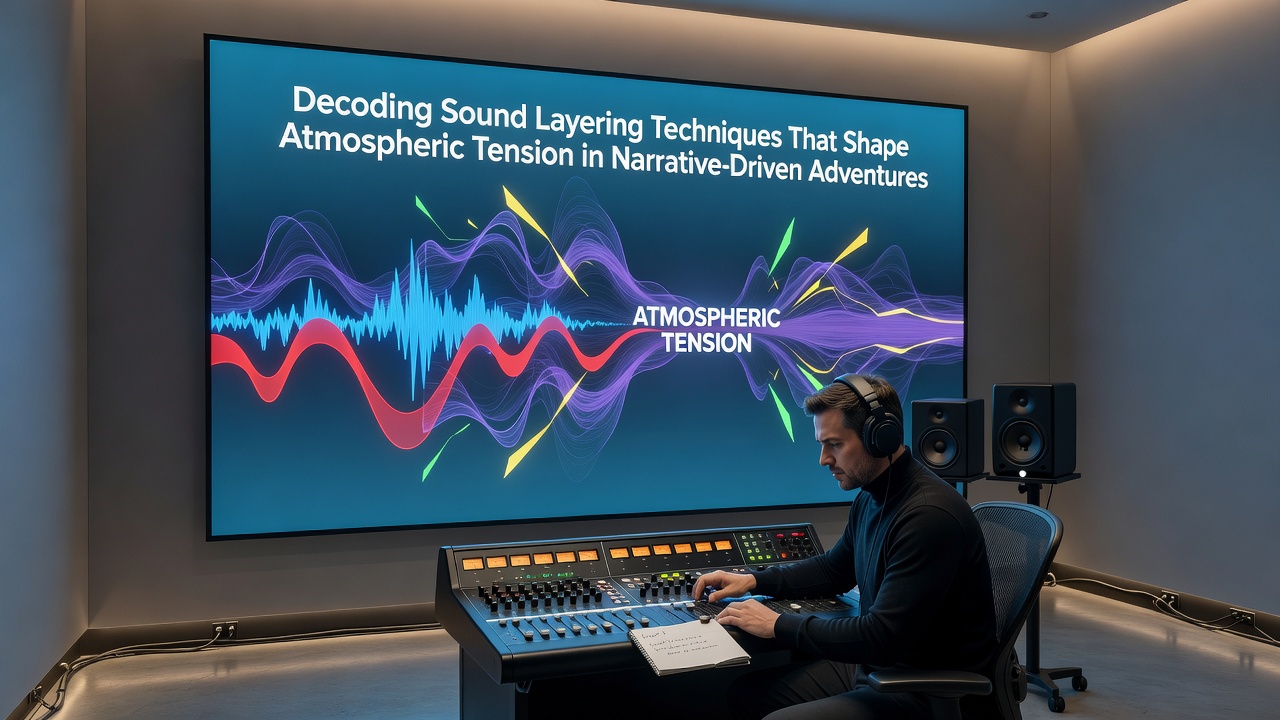
Sound layering forms a core element in narrative-driven adventures where developers combine multiple audio elements to build atmospheric tension without relying on visuals alone. Teams record separate tracks for ambient noise, musical motifs, environmental effects, and character-driven sounds then blend them in real time based on player position and story progression. This approach allows tension to rise gradually as layers intensify or drop away at key moments.
Core Components of Audio Layering
Ambient beds establish the baseline environment through overlapping recordings of wind, distant echoes, and subtle mechanical hums that set the mood in enclosed spaces or open ruins. Researchers at the University of Melbourne documented how these foundational layers interact with higher-frequency elements to create unease in games released between 2020 and 2025. Musical cues enter next as sparse piano notes or low strings that gain complexity when tension peaks, while sound effects such as creaking floors or breathing patterns overlay everything to anchor the player in the scene.
Dynamic mixing systems adjust volume and frequency balance automatically using middleware tools that respond to gameplay variables. One study released in August 2026 by the Interactive Audio Research Group at Stanford University showed that games employing at least four simultaneous layers produced measurable increases in player heart rate during suspense sequences compared with simpler stereo mixes.
Technical Implementation in Modern Titles
Engineers use middleware platforms like FMOD and Wwise to assign priority levels and trigger conditions to each layer. When a character enters a restricted area, the system raises the intensity of a low-frequency drone while muting lighter melodic elements to shift focus toward threat indicators. Data from industry reports indicate that titles using these methods maintain consistent audio performance across multiple hardware platforms because layers can be culled based on available processing power.
Voice recordings integrate into the structure through spatial positioning rather than simple volume changes. Developers place dialogue tracks in three-dimensional space so whispers appear to come from specific directions while maintaining separation from music and effects. This separation prevents masking where important narrative details become lost in dense soundscapes.
Case Examples from Released Games
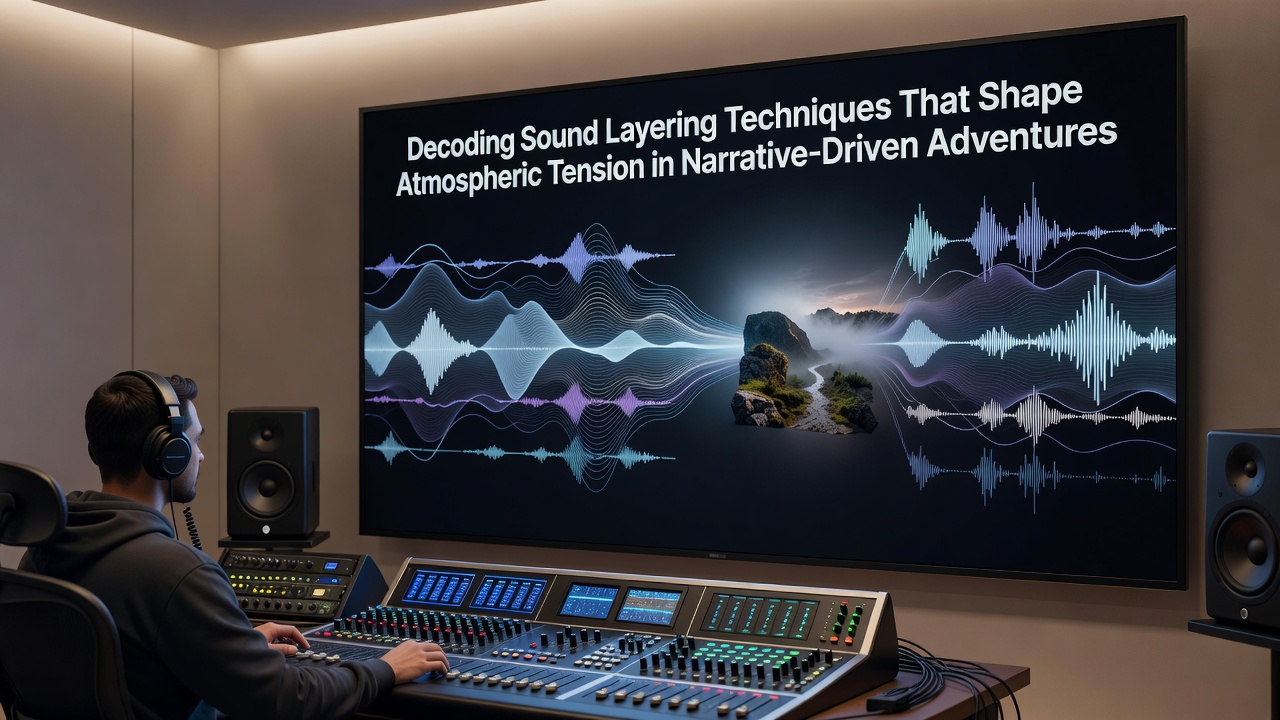
Games such as those developed by studios focused on exploration-heavy narratives demonstrate layered audio in underground sequences where water drips combine with distant machinery and rising orchestral tension. Observers note that these combinations guide player attention toward hidden threats without explicit visual markers. Another example appears in forest-based adventures where birdsong layers thin out as players approach danger zones, replaced by rustling foliage and heartbeat effects that sync with character movement speed.
European research groups including those affiliated with the Technical University of Berlin have examined how regional audio teams adapt layering for cultural sound references, such as incorporating specific urban echoes in city-set stories. Their findings reveal that localization teams often adjust layer density rather than replace entire tracks to preserve tension curves across different language versions.
Player Response and Measurement
Physiological tracking during playtests shows that layered audio correlates with sustained attention spans in story sections exceeding thirty minutes. According to findings from the Canadian Digital Media Research Network, participants exposed to multi-layer soundtracks reported higher immersion scores while maintaining lower frustration levels than those hearing single-track versions. Metrics include skin conductance and eye-tracking patterns that indicate focused scanning of environments when audio cues provide directional hints.
Developers continue refining these techniques through iterative testing cycles that compare different layer combinations against story beats. The process relies on quantitative feedback from large player samples rather than individual preferences, ensuring consistent tension delivery across diverse audiences.
Conclusion
Sound layering remains an evolving practice that integrates technical constraints with narrative goals in adventure games. Continued advances in real-time processing and research into auditory perception support more precise control over atmospheric tension. Teams apply these methods across platforms while adapting to hardware capabilities and player feedback data gathered from global releases.